
Finalist for the American Academy of Religion (AAR) Book Award 2020
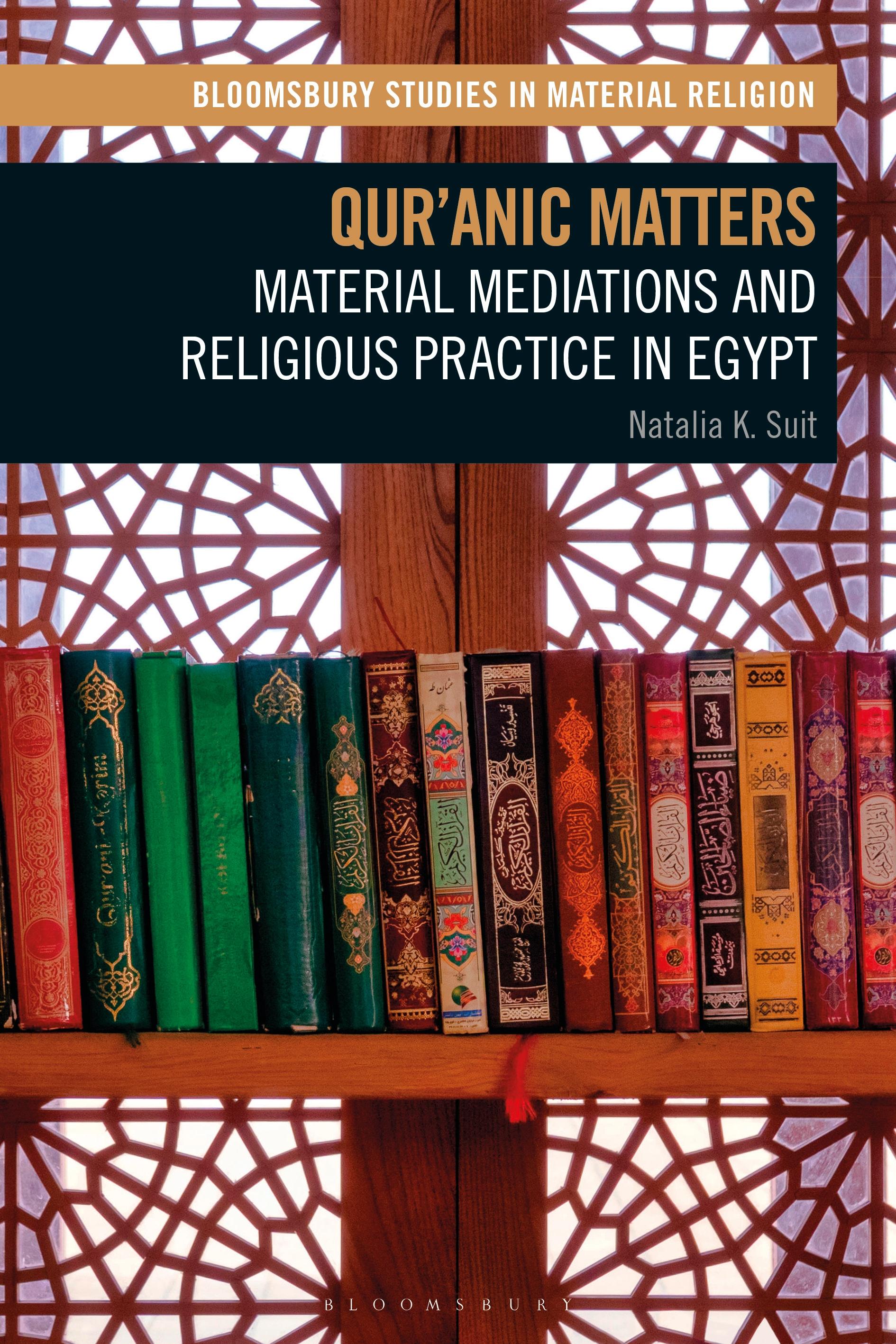
In Qur'anic Matters, Natalia Suit explores the materiality of books, focusing on the mushaf. With its paper, binding, ink, and script, the mushaf is not simply a carrier of the Qur'anic text but, by the virtue of its material body, it also has the ability to engender reformulations of religious knowledge and practice. Reading the Qur'an on a screen of a phone, for example, does not require the same forms of ritual ablutions as reading a printed text. The rules of purity limiting the access to the Qur'anic text for menstruating woman change when the Qur'anic text is mediated by digital bytes instead of paper.
Qur'anic Matters spans the time between two important technological shifts-the introduction of printed Qur'anic books in Egypt in the early nineteenth century and the digitization of the Qur'an almost two centuries later. Throughout, Natalia Suit weaves together the theological, legal, economic, and social “presences” of the Qur'anic books into a single account. She argues that the message and the materiality of the object are not separate from each other, nor are they separate from the human bodies with which they come in contact.
In Qur'anic Matters, Natalia Suit explores the materiality of books, focusing on the mushaf. With its paper, binding, ink, and script, the mushaf is not simply a carrier of the Qur'anic text but, by the virtue of its material body, it also has the ability to engender reformulations of religious knowledge and practice. Reading the Qur'an on a screen of a phone, for example, does not require the same forms of ritual ablutions as reading a printed text. The rules of purity limiting the access to the Qur'anic text for menstruating woman change when the Qur'anic text is mediated by digital bytes instead of paper.
Qur'anic Matters spans the time between two important technological shifts-the introduction of printed Qur'anic books in Egypt in the early nineteenth century and the digitization of the Qur'an almost two centuries later. Throughout, Natalia Suit weaves together the theological, legal, economic, and social “presences” of the Qur'anic books into a single account. She argues that the message and the materiality of the object are not separate from each other, nor are they separate from the human bodies with which they come in contact.
Betal enkelt med kort, Klarna, Apple Pay eller Google Pay. Ikke fornøyd? Du har alltid 14 dagers angrerett. Les mer i våre vilkår. Har du spørsmål, send oss en e-post på hello@memmo.org.
Memmo gjør det enklere å studere – uansett hvor du er i verden. Hos oss samler du pensumbøker og smarte studieverktøy på ett og samme sted: sammendrag, quizer, podkaster og flashcards. Og så Ted, din studiekompis som svarer på alt du lurer på. Over 50 000 studenter studerer allerede her – bygget for at du skal lære raskere og stresse mindre.