
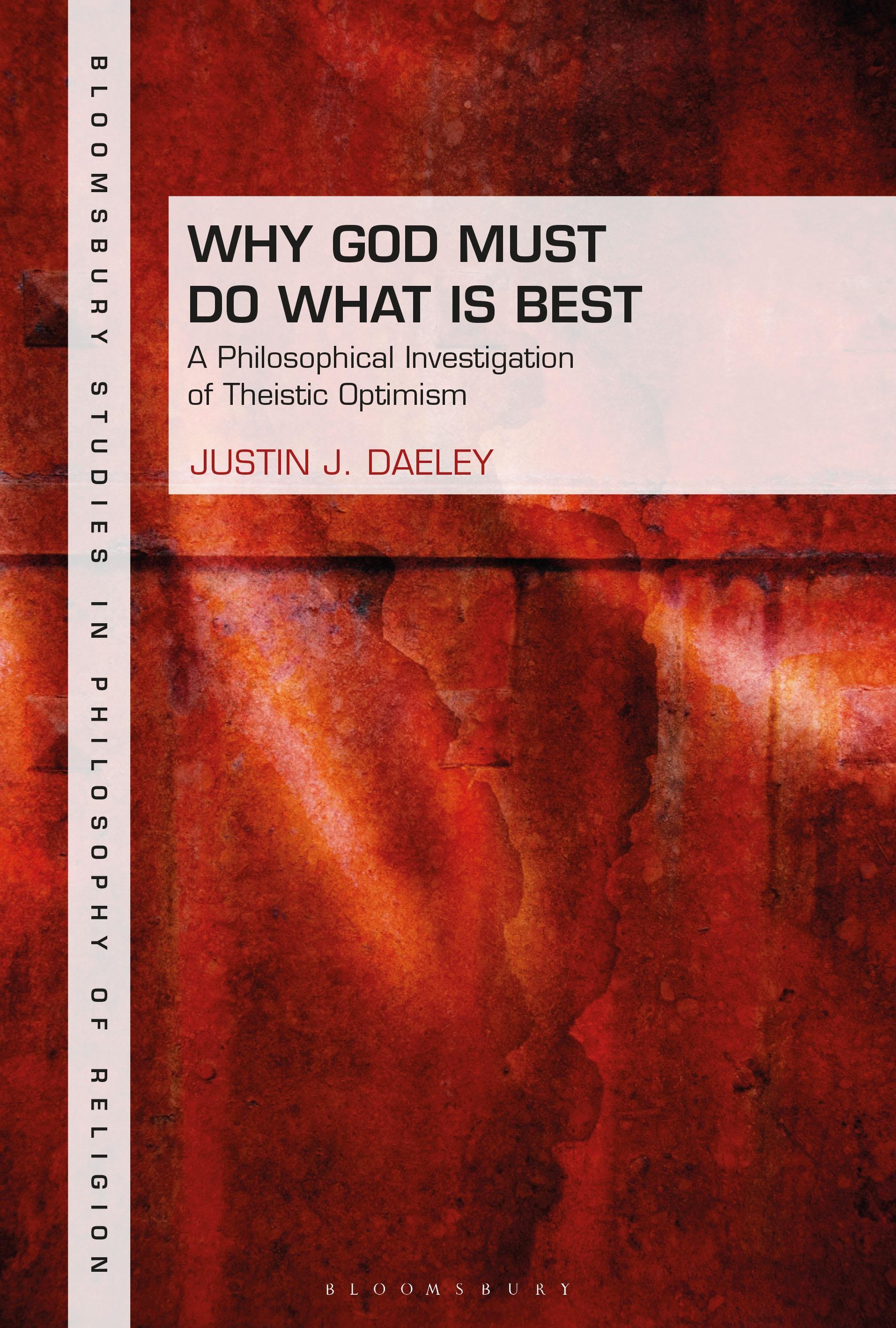
The idea that God, understood as the most perfect being, must create the best possible world is often underacknowledged by contemporary theologians and philosophers of religion. This book clearly demonstrates the rationale for what Justin J. Daeley calls Theistic Optimism and interacts with the existing literature in order to highlight its limitations. While locating Theistic Optimism in the thought of Gottfried Leibniz, Daeley argues that Theistic Optimism is consistent with divine freedom, aseity, gratitude, and our typical modal intuitions. By offering plausible solutions to each of the criticisms levelled against Theistic Optimism, he also provides a vigorous and original defence against the charge that it deviates from the Christian tradition.
Engaging with both the Christian tradition and contemporary theologians and philosophers, Why God Must Do What is Best positions the idea of Theistic Optimism firmly within the language of contemporary philosophy of religion.
Engaging with both the Christian tradition and contemporary theologians and philosophers, Why God Must Do What is Best positions the idea of Theistic Optimism firmly within the language of contemporary philosophy of religion.
Betal enkelt med kort, Klarna, Apple Pay eller Google Pay. Ikke fornøyd? Du har alltid 14 dagers angrerett. Les mer i våre vilkår. Har du spørsmål, send oss en e-post på hello@memmo.org.
Memmo gjør det enklere å studere – uansett hvor du er i verden. Hos oss samler du pensumbøker og smarte studieverktøy på ett og samme sted: sammendrag, quizer, podkaster og flashcards. Og så Ted, din studiekompis som svarer på alt du lurer på. Over 50 000 studenter studerer allerede her – bygget for at du skal lære raskere og stresse mindre.