
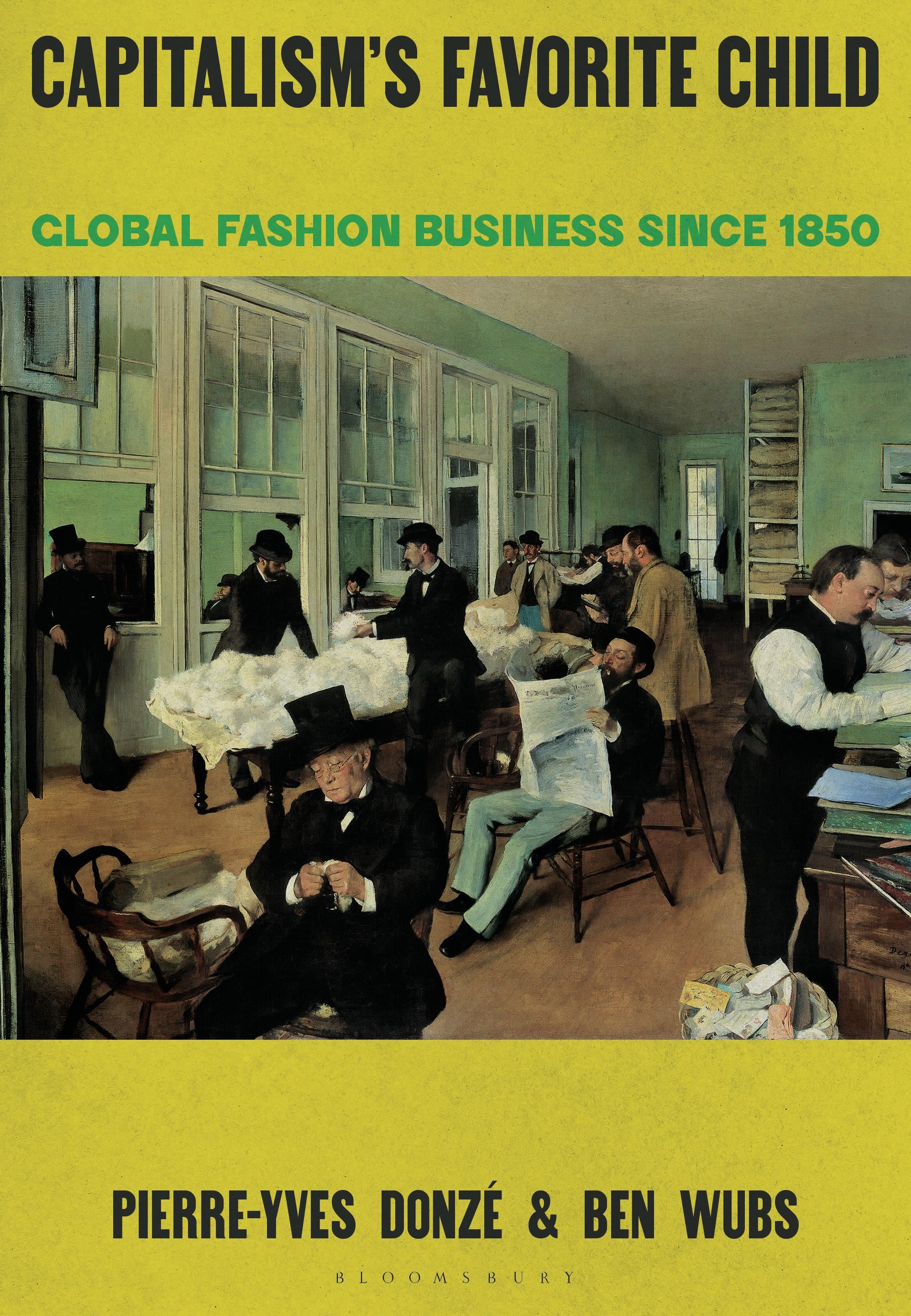
Combining research methods from business and global history, Donzé and Wubs equip readers with a vital and expansive new analysis of the development of the global fashion industry from the mid-19th century to today.
Ranging across Europe, the Americas and Asia over two centuries, Donzé and Wubs bring the work of manufacturers and designers together with trade associations, fashion forecasters and retailers to investigate the transformations of this truly global business - 'capitalism's favorite child' (Werner Sombart). New data and sources reveal unexpected threads and detail within even such well-trodden narratives as Chanel under the occupation, the Nylon revolution, and the retail strategy of United Colours of Benetton.
What impact do the hidden histories of fabric trades such as cotton, wool and silk have on how we dress today? What continues to divide 'high' and 'low' fashion when low-cost production countries transition into high-income economies? How do technological changes from 'fast fashion' to e-commerce trace back to the industry's beginnings – and what can students, scholars, and industry leaders learn from this history about what the future might hold?
Featuring new work on unstudied areas from Swiss silk companies in East Asia to the influence of finance on modern fashion, this is the most global, long-term, and interconnected history of the industry to date.
Ranging across Europe, the Americas and Asia over two centuries, Donzé and Wubs bring the work of manufacturers and designers together with trade associations, fashion forecasters and retailers to investigate the transformations of this truly global business - 'capitalism's favorite child' (Werner Sombart). New data and sources reveal unexpected threads and detail within even such well-trodden narratives as Chanel under the occupation, the Nylon revolution, and the retail strategy of United Colours of Benetton.
What impact do the hidden histories of fabric trades such as cotton, wool and silk have on how we dress today? What continues to divide 'high' and 'low' fashion when low-cost production countries transition into high-income economies? How do technological changes from 'fast fashion' to e-commerce trace back to the industry's beginnings – and what can students, scholars, and industry leaders learn from this history about what the future might hold?
Featuring new work on unstudied areas from Swiss silk companies in East Asia to the influence of finance on modern fashion, this is the most global, long-term, and interconnected history of the industry to date.
Sider: 304
Kategori: Ekonomi & Utveckling
e-ISBN: 9781350109834
Fraktvekt: 1.2 kg
Sendes innen: 1-2 dager
Betal enkelt med kort, Klarna, Apple Pay eller Google Pay. Ikke fornøyd? Du har alltid 14 dagers angrerett. Les mer i våre vilkår. Har du spørsmål, send oss en e-post på hello@memmo.org.
Memmo gjør det enklere å studere – uansett hvor du er i verden. Hos oss samler du pensumbøker og smarte studieverktøy på ett og samme sted: sammendrag, quizer, podkaster og flashcards. Og så Ted, din studiekompis som svarer på alt du lurer på. Over 50 000 studenter studerer allerede her – bygget for at du skal lære raskere og stresse mindre.