
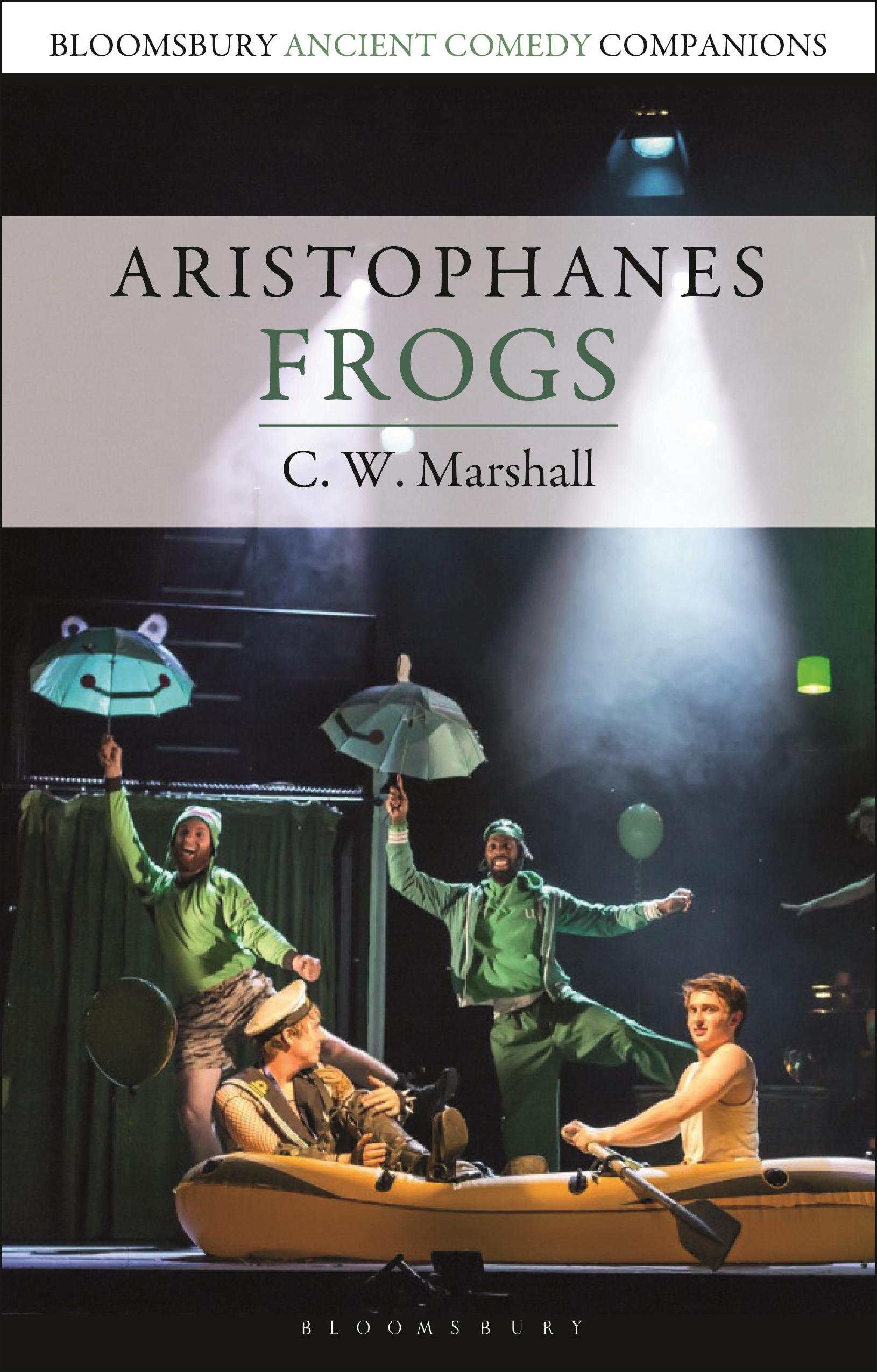
A comedy about tragedy and a play about playmaking, Aristophanes' Frogs (405 BCE) is perhaps the most popular of ancient comedies. This new introduction guides students through the play, its themes and contemporary contexts, and its reception history. Frogs offers sustained engagement with the Athenian literary scene, with the politics of Athens at the end of the Peloponnesian War, and with the religious understanding of the fifth-century city. It presents the earliest direct criticism of theatre and a detailed description of the Underworld, and also dramatizes the place of Mystery cults in the religious life of Athens and shows the political concerns that galvanized the citizens.
It is also genuinely funny, showcasing a range of comic techniques, including literary and musical parody, political invective, grotesque distortion, wordplay, prop comedy, and funny costumes. Frogs has inspired literary works by Henry Fielding, George Bernard Shaw, and Tom Stoppard.
This book explores all of these features in a series of short chapters designed to be accessible to a new reader of ancient comedy. It proceeds linearly through the play, addressing a range of issues, but paying particular attention to stagecraft and performance. It also offers a bold new interpretation of the play, suggesting that the action of Frogs was not the first time Euripides and Aeschylus had competed against each other.
It is also genuinely funny, showcasing a range of comic techniques, including literary and musical parody, political invective, grotesque distortion, wordplay, prop comedy, and funny costumes. Frogs has inspired literary works by Henry Fielding, George Bernard Shaw, and Tom Stoppard.
This book explores all of these features in a series of short chapters designed to be accessible to a new reader of ancient comedy. It proceeds linearly through the play, addressing a range of issues, but paying particular attention to stagecraft and performance. It also offers a bold new interpretation of the play, suggesting that the action of Frogs was not the first time Euripides and Aeschylus had competed against each other.
Betal enkelt med kort, Klarna, Apple Pay eller Google Pay. Ikke fornøyd? Du har alltid 14 dagers angrerett. Les mer i våre vilkår. Har du spørsmål, send oss en e-post på hello@memmo.org.
Memmo gjør det enklere å studere – uansett hvor du er i verden. Hos oss samler du pensumbøker og smarte studieverktøy på ett og samme sted: sammendrag, quizer, podkaster og flashcards. Og så Ted, din studiekompis som svarer på alt du lurer på. Over 50 000 studenter studerer allerede her – bygget for at du skal lære raskere og stresse mindre.