
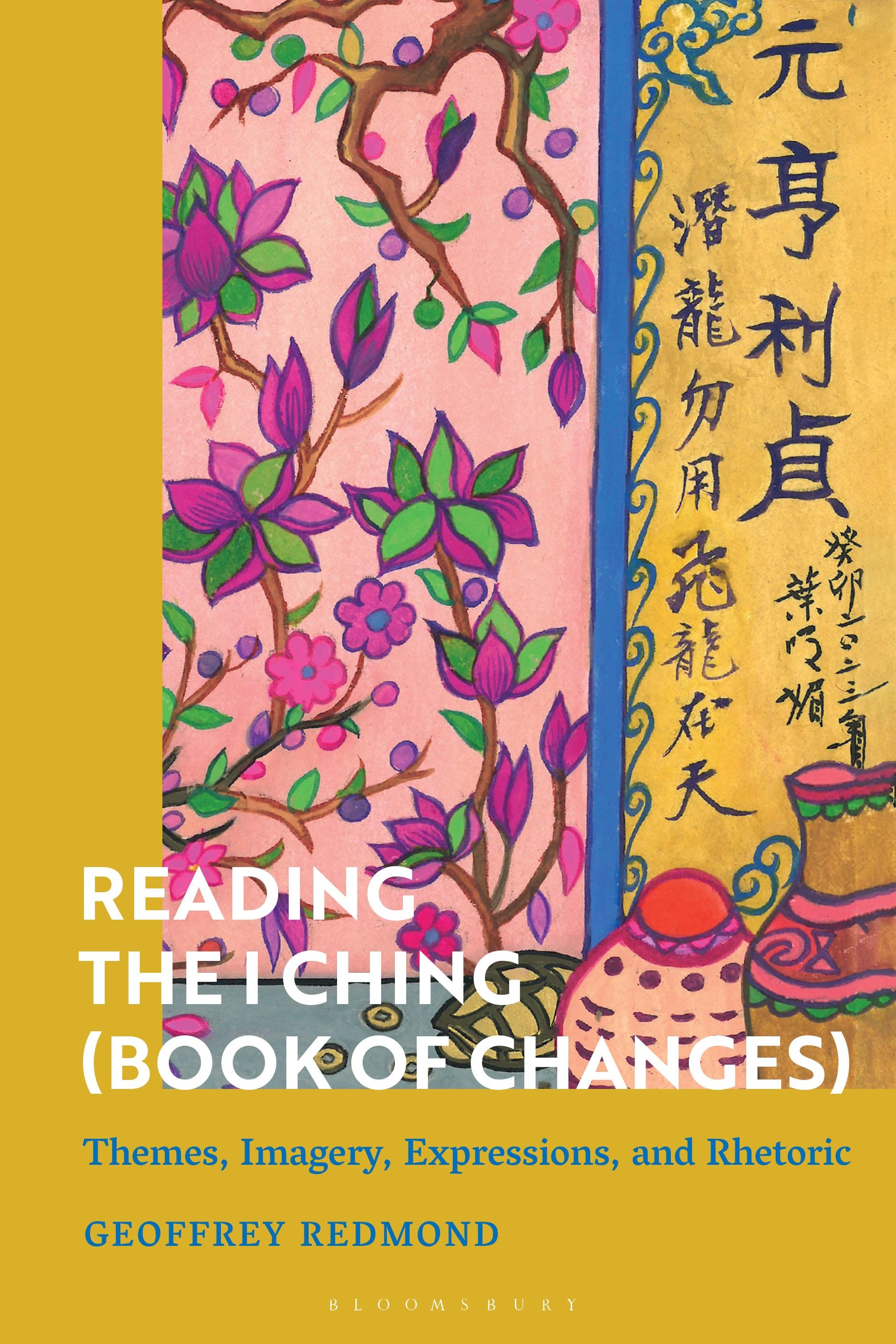
The 3,000 year old I Ching is the most esteemed of the ancient Chinese classics, yet also the most enigmatic. Reading the I Ching (Book of Changes) incorporates recent advances in scholarship, such as recently excavated texts, and demonstrates how the Zhouyi (the ancient textual layer of the I Ching) was compiled from mostly oral material and how it was organized to serve as an easily consulted compendium of divination responses.
In this book Geoffrey Redmond clarifies the meanings of the ancient text by examining use of literary devices such as prognostic terms, imagery from daily life, rhetorical tropes, metaphors, proverbs and set phrases. This provides insight on how the Zhouyi was composed and explains its use for divination. It also shows how, centuries later, the Zhouyi was adapted by the Confucians, who believed it to be the creation of ancient sages, and the source of their metaphysics and cosmology. Redmond also analyzes the Changes through a variety of philological heuristics, such as the Sapir-Whorf hypothesis, methods of analogy and anomaly, the distinction between argumentative and context dependence, as well as modern approaches such as Jungian psychology, and critical theory. Included are the interlinear Chinese text, and a glossary of key words in English, Chinese, and pinyin, making it essential reading for students studying Chinese philosophy, Chinese religion, and early Chinese history, as well as readers looking for a clear and accessible gloss of this text.
In this book Geoffrey Redmond clarifies the meanings of the ancient text by examining use of literary devices such as prognostic terms, imagery from daily life, rhetorical tropes, metaphors, proverbs and set phrases. This provides insight on how the Zhouyi was composed and explains its use for divination. It also shows how, centuries later, the Zhouyi was adapted by the Confucians, who believed it to be the creation of ancient sages, and the source of their metaphysics and cosmology. Redmond also analyzes the Changes through a variety of philological heuristics, such as the Sapir-Whorf hypothesis, methods of analogy and anomaly, the distinction between argumentative and context dependence, as well as modern approaches such as Jungian psychology, and critical theory. Included are the interlinear Chinese text, and a glossary of key words in English, Chinese, and pinyin, making it essential reading for students studying Chinese philosophy, Chinese religion, and early Chinese history, as well as readers looking for a clear and accessible gloss of this text.
Betal enkelt med kort, Klarna, Apple Pay eller Google Pay. Ikke fornøyd? Du har alltid 14 dagers angrerett. Les mer i våre vilkår. Har du spørsmål, send oss en e-post på hello@memmo.org.
Memmo gjør det enklere å studere – uansett hvor du er i verden. Hos oss samler du pensumbøker og smarte studieverktøy på ett og samme sted: sammendrag, quizer, podkaster og flashcards. Og så Ted, din studiekompis som svarer på alt du lurer på. Over 50 000 studenter studerer allerede her – bygget for at du skal lære raskere og stresse mindre.