
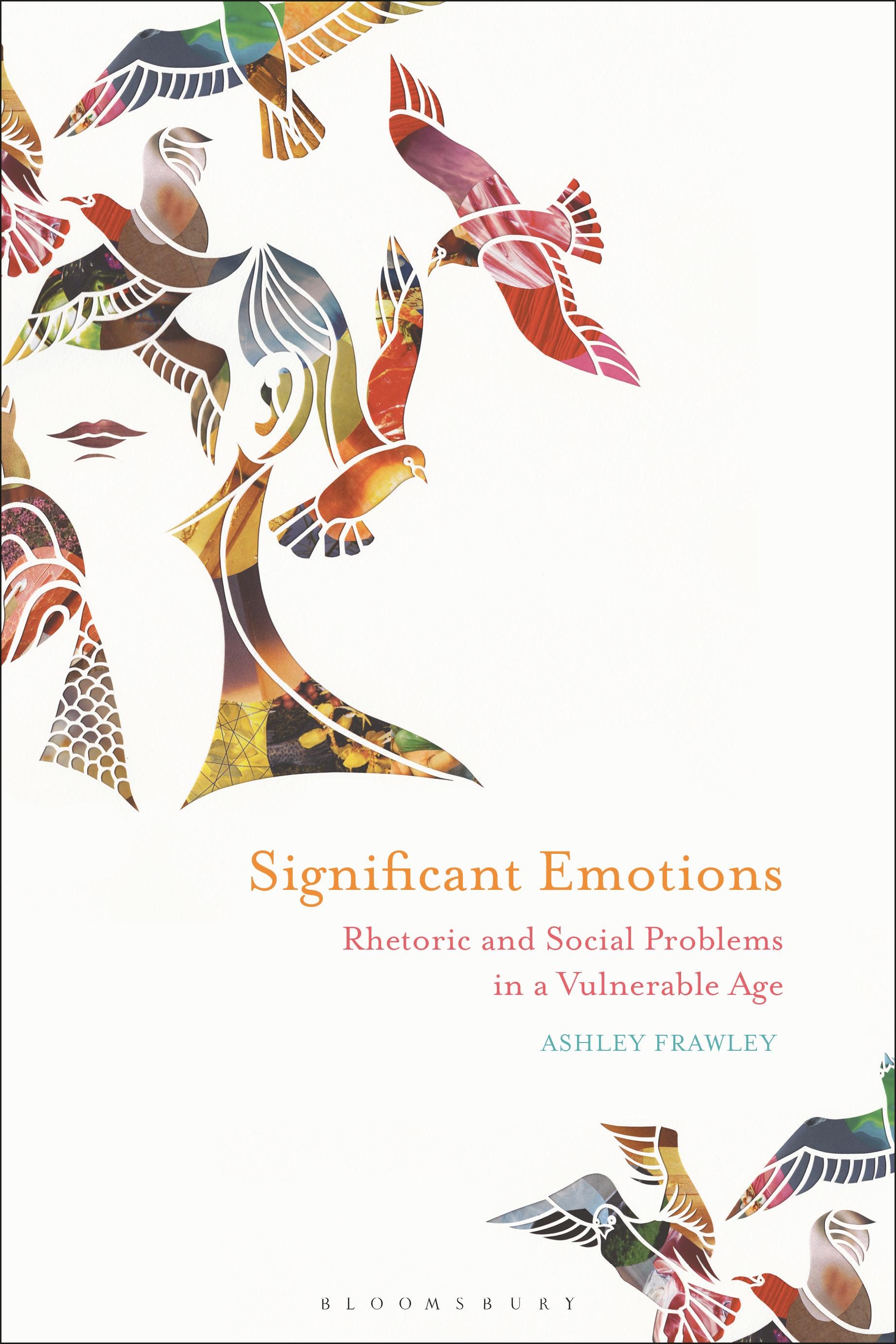
Significant Emotions is a piercing examination of the rising use of emotional signifiers in public debate and the rhetoric of an increasingly expansive array of social problems. Building on ideas developed in Ashley Frawley's previous book, Semiotics of Happiness, it examines in detail the 'emotional turn' across the social sciences and the broader cultural rise of the 'age of emotion' and its influence on how we talk about and approach new social issues.
The book explores the rise of supposedly 'positive' emotional signifiers that have gained prominence as powerful causes of and solutions to nearly every social ill-from promoting self-esteem, happiness and mindfulness to concerns for well-being and mental health. Conceptualizing the rise and comparative decline of these emotional signifiers as cycles of discovery, adoption, expansion, and exhaustion, the book argues that rather than calling into question one or another of these signifiers, it is necessary to penetrate deeper to the underlying cultural currents that drive their adoption and contribute to their rhetorical power.
Through a systematic and in-depth exploration of the appearance of these trends in a variety of claims-making activities across academia, traditional and social media, and social policy, Frawley argues that the 'age of emotion' does not represent a step toward a more enlightened and emotionally aware society. Rather, it signifies a preoccupation with emotional deficits and a firm belief that emotional disorientation ultimately underlies nearly every social ill. Emerging from the analysis is the conclusion that emotions have become key signifiers of broader cultural tendencies to affirm conservatism over progress, vulnerability over resilience, and the determined self over the free willing subject.
The book explores the rise of supposedly 'positive' emotional signifiers that have gained prominence as powerful causes of and solutions to nearly every social ill-from promoting self-esteem, happiness and mindfulness to concerns for well-being and mental health. Conceptualizing the rise and comparative decline of these emotional signifiers as cycles of discovery, adoption, expansion, and exhaustion, the book argues that rather than calling into question one or another of these signifiers, it is necessary to penetrate deeper to the underlying cultural currents that drive their adoption and contribute to their rhetorical power.
Through a systematic and in-depth exploration of the appearance of these trends in a variety of claims-making activities across academia, traditional and social media, and social policy, Frawley argues that the 'age of emotion' does not represent a step toward a more enlightened and emotionally aware society. Rather, it signifies a preoccupation with emotional deficits and a firm belief that emotional disorientation ultimately underlies nearly every social ill. Emerging from the analysis is the conclusion that emotions have become key signifiers of broader cultural tendencies to affirm conservatism over progress, vulnerability over resilience, and the determined self over the free willing subject.
Betal enkelt med kort, Klarna, Apple Pay eller Google Pay. Ikke fornøyd? Du har alltid 14 dagers angrerett. Les mer i våre vilkår. Har du spørsmål, send oss en e-post på hello@memmo.org.
Memmo gjør det enklere å studere – uansett hvor du er i verden. Hos oss samler du pensumbøker og smarte studieverktøy på ett og samme sted: sammendrag, quizer, podkaster og flashcards. Og så Ted, din studiekompis som svarer på alt du lurer på. Over 50 000 studenter studerer allerede her – bygget for at du skal lære raskere og stresse mindre.