
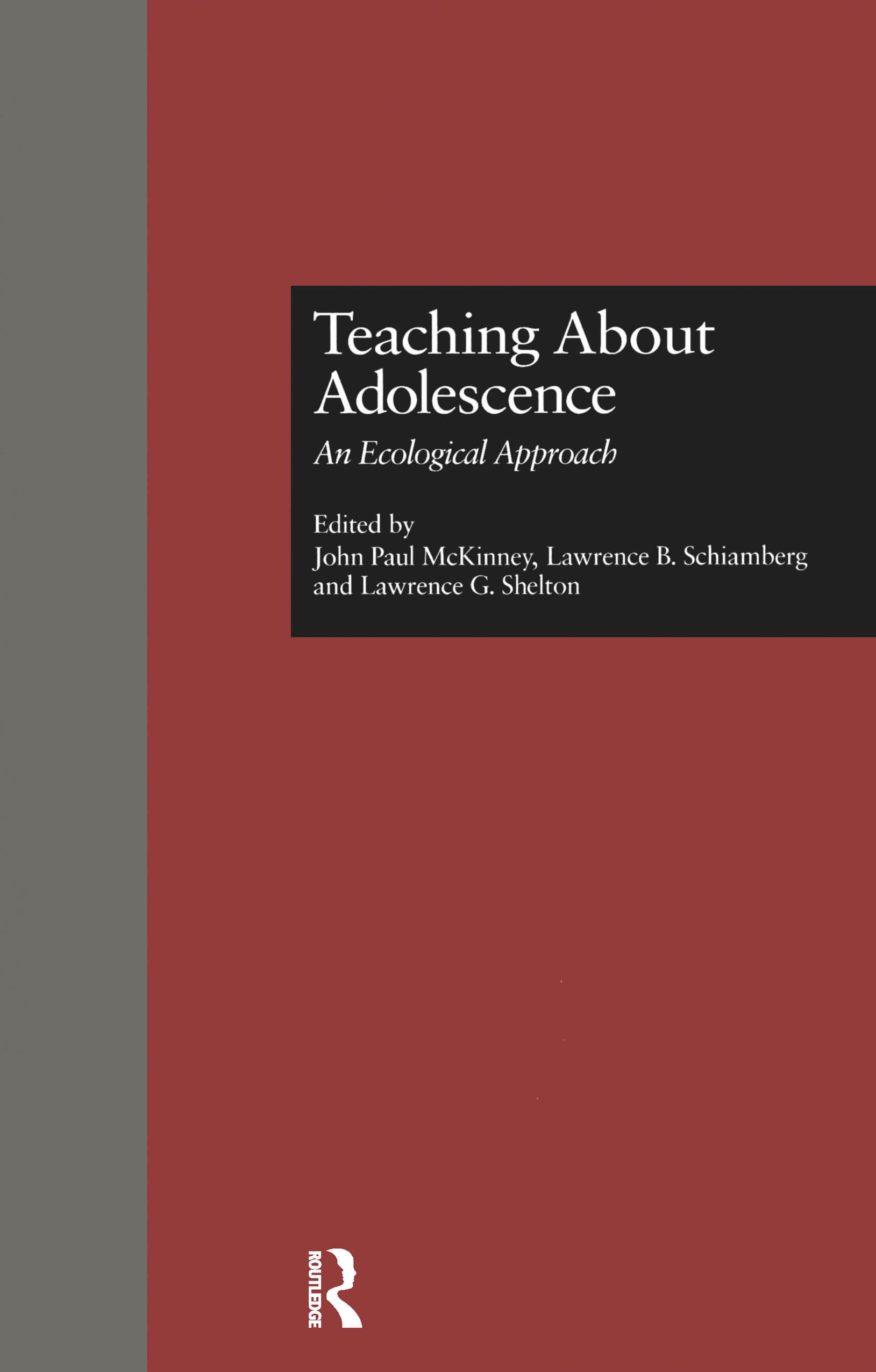
For this volume, Professors McKinney, Schiamberg, and Shelton assembled contributors to write about something that is written about far too infrequently: How to present scientific research on adolescent development in ways students find interesting, believable, relevant, and worth remembering when the term is over. Graduate education in adolescent development almost always guarantees adequate training in research and theory, but training in creative pedagogy is more often than not left to chance. Those of us who teach adolescence regularly know that colleagues all over the world use innovative approaches to take advantage of the real-world relevance of the material, but most of these approaches remain insiders’ tricks of the trade. Teaching About Adolescence is, to my knowledge, the first volume that describes and explains how—and, more importantly, why—the best teachers of adolescence do what they do. It is a much needed book. But this book is much more than a collection of recipes for interesting class exercises or term projects. First published in 1999. Routledge is an imprint of Taylor & Francis, an informa company.
Betal enkelt med kort, Klarna, Apple Pay eller Google Pay. Ikke fornøyd? Du har alltid 14 dagers angrerett. Les mer i våre vilkår. Har du spørsmål, send oss en e-post på hello@memmo.org.
Memmo gjør det enklere å studere – uansett hvor du er i verden. Hos oss samler du pensumbøker og smarte studieverktøy på ett og samme sted: sammendrag, quizer, podkaster og flashcards. Og så Ted, din studiekompis som svarer på alt du lurer på. Over 50 000 studenter studerer allerede her – bygget for at du skal lære raskere og stresse mindre.