
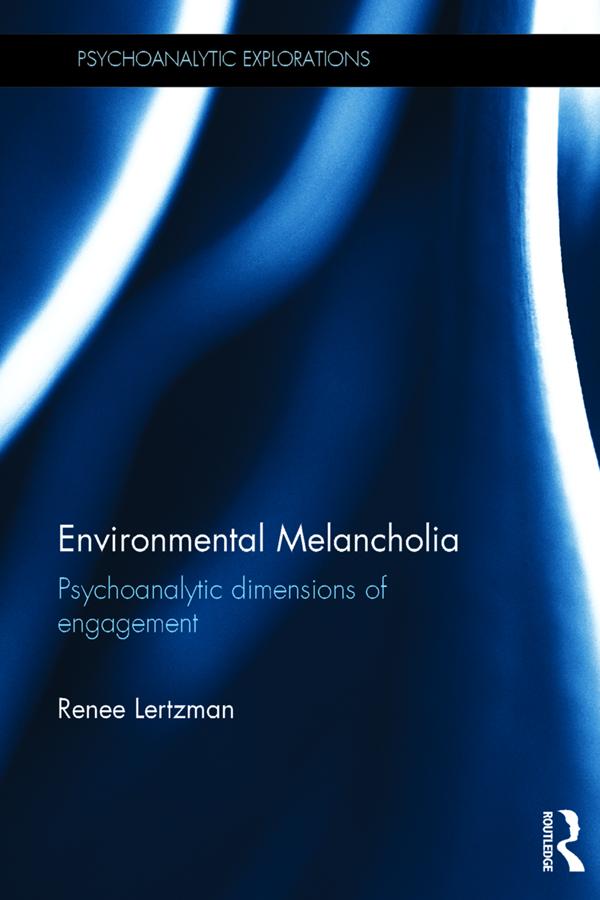
In this groundbreaking book, Renee Lertzman applies psychoanalytic theory and psychosocial research to the issue of public engagement and public apathy in response to chronic ecological threats. By highlighting unconscious and affective dimensions of contemporary ecological issues, Lertzman deconstructs the idea that there is a gap between what people care about and what is actually carried out in policy and personal practice. In doing so, she presents an innovative way to think about and design engagement practices and policy interventions.
Based on key qualitative fieldwork and in-depth interviews conducted in Green Bay, Wisconsin, each chapter provides a psychosocial, psychoanalytic perspective on subjectivity, affect and identity, and considers what this means for understanding behaviour in relation to environmental crises and climate change. The book argues for a theory of environmental melancholia that accounts for the ways in which people experience profound loss and disruption caused by environmental issues, and yet may have trouble expressing or making sense of such experiences.
Environmental Melancholia offers a fresh perspective to the field of environmental psychology that until now has been largely dominated by research in cognitive, behavioural and social psychology. It will appeal to academics, researchers and postgraduate students in the fields of psychoanalysis, psychosocial studies and sustainability, as well as policy makers and educators internationally.
Betal enkelt med kort, Klarna, Apple Pay eller Google Pay. Ikke fornøyd? Du har alltid 14 dagers angrerett. Les mer i våre vilkår. Har du spørsmål, send oss en e-post på hello@memmo.org.
Memmo gjør det enklere å studere – uansett hvor du er i verden. Hos oss samler du pensumbøker og smarte studieverktøy på ett og samme sted: sammendrag, quizer, podkaster og flashcards. Og så Ted, din studiekompis som svarer på alt du lurer på. Over 50 000 studenter studerer allerede her – bygget for at du skal lære raskere og stresse mindre.