
Social and political psychologists have attempted to reveal the reasons why individuals and societies that acknowledge that peace would improve their personal and collective well-being, and are aware of the required actions needed to promote it, are simply incapable of making this step forward. Some social psychologists have advocated the idea that certain societal beliefs and collective memories about the nature of the opponent, the in-group, the history, and the current state of the conflict distort the perceptions of society members and prevent them from identifying opportunities for peace. But these cognitive barriers capture only part of the picture.
Could identifying the role of discrete emotions in conflicts and conflict resolution potentially provide a wide platform for developing pinpoint conflict resolution interventions?
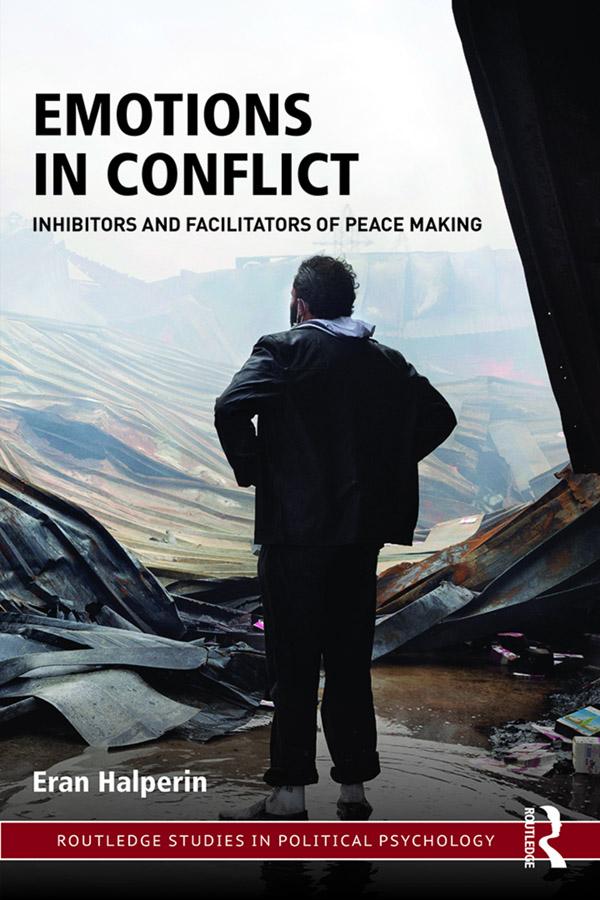
Using a vast array of primary sources, critical literature analysis, and firsthand personal experiences in various conflict zones (Middle East, Cyprus, Bosnia, and Northern Ireland), Eran Halperin introduces a new perspective on psychological barriers to peace. Halperin focuses on various emotional mechanisms that hamper peace processes, even when parties face real opportunities for conflict resolution. More specifically, he explores how hatred, anger, fear, angst, hope, despair, empathy, guilt, and shame, combined with various emotion regulation strategies, provide emotions-based explanations for people's attitudinal and behavioral reactions to peace-related events during the ongoing process of conflict resolution.
Written in a clear and accessible style, Emotions in Conflict offers a thought-provoking and pioneering insight into the role discrete intergroup emotions play in impeding, as well as facilitating, peace processes in intractable conflicts. This book is essential reading for those who study intractable conflicts and their resolutions, and those who are interested in the ‘real-world’ implication of recent theories and findings on emotion and emotion regulation.
Betal enkelt med kort, Klarna, Apple Pay eller Google Pay. Ikke fornøyd? Du har alltid 14 dagers angrerett. Les mer i våre vilkår. Har du spørsmål, send oss en e-post på hello@memmo.org.
Memmo gjør det enklere å studere – uansett hvor du er i verden. Hos oss samler du pensumbøker og smarte studieverktøy på ett og samme sted: sammendrag, quizer, podkaster og flashcards. Og så Ted, din studiekompis som svarer på alt du lurer på. Over 50 000 studenter studerer allerede her – bygget for at du skal lære raskere og stresse mindre.