
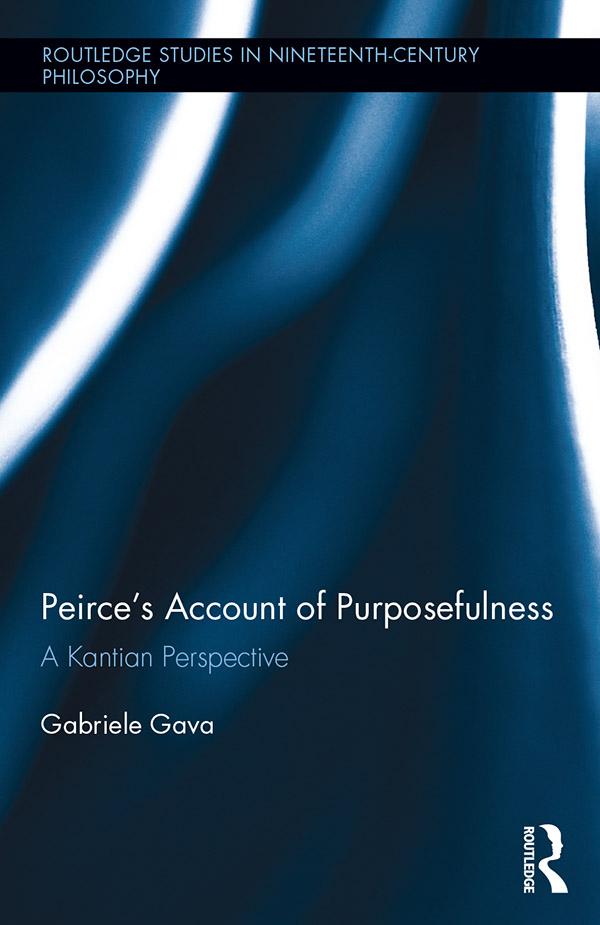
This book presents a systematic interpretation of Charles S. Peirce’s work based on a Kantian understanding of his teleological account of thought and inquiry. Departing from readings that contrast Peirce’s treatment of purpose, end, and teleology with his early studies of Kant, Gabriele Gava instead argues that focusing on Peirce’s purposefulness as a necessary regulative (in the Kantian sense) condition for inquiry and semiotic processes allows for a transcendental interpretation of Peirce’s philosophical project. The author advances this interpretation through presenting original views on aspects of Peirce’s thought, including: a detailed analysis of Peirce’s ‘methodeutic’ and ‘speculative rhetoric,’ as well as his ‘critical common-sensism’; a comparison between Peirce’s and James’ pragmatisms in view of the account of purposefulness Gava puts forth; and an examination of the logical relationships that order Peirce’s architectonic classification of the sciences.
Betal enkelt med kort, Klarna, Apple Pay eller Google Pay. Ikke fornøyd? Du har alltid 14 dagers angrerett. Les mer i våre vilkår. Har du spørsmål, send oss en e-post på hello@memmo.org.
Memmo gjør det enklere å studere – uansett hvor du er i verden. Hos oss samler du pensumbøker og smarte studieverktøy på ett og samme sted: sammendrag, quizer, podkaster og flashcards. Og så Ted, din studiekompis som svarer på alt du lurer på. Over 50 000 studenter studerer allerede her – bygget for at du skal lære raskere og stresse mindre.