
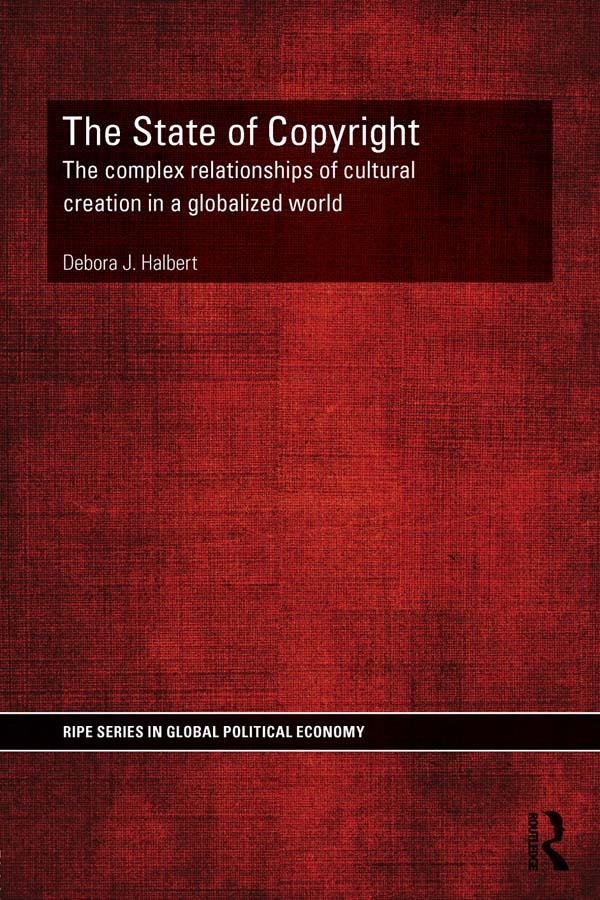
This book seeks to make an intervention into the ongoing debate about the scope and intensity of global copyright laws.
While mapping out the primary actors in the context of globalization and the modern political economy of information ownership, the argument is made that alternatives to further expansion of copyright are necessary. By examining the multiple and competing interests in creating the legal regime of copyright law, this books attempts to map the political economy of copyright in the information age, critique the concentration of ownership that is intrinsic in the status quo, and provide an assessment of the state of the contemporary global copyright landscape and its futures. It draws upon the current narratives of copyright as produced by corporate, government, and political actors and frames these narratives as language games within a global political project to define how information and culture will be shared and exchanged in the future. The text problematizes the relationship of the state to culture, comments on the global flows of culture, and critiques the regulatory apparatus that is in place to commodify culture and align it with the contemporary nation-state. In the end, the possibility of non-commodified and more open futures are explored.
The State of Copyright will be of particular interest for students and scholars of international political economy, law, political science, anthropology, sociology, cultural studies, library sciences, and communication studies. It also will appeal to a growing popular audience that has taken an interest in the issues of copyright.
Betal enkelt med kort, Klarna, Apple Pay eller Google Pay. Ikke fornøyd? Du har alltid 14 dagers angrerett. Les mer i våre vilkår. Har du spørsmål, send oss en e-post på hello@memmo.org.
Memmo gjør det enklere å studere – uansett hvor du er i verden. Hos oss samler du pensumbøker og smarte studieverktøy på ett og samme sted: sammendrag, quizer, podkaster og flashcards. Og så Ted, din studiekompis som svarer på alt du lurer på. Over 50 000 studenter studerer allerede her – bygget for at du skal lære raskere og stresse mindre.