
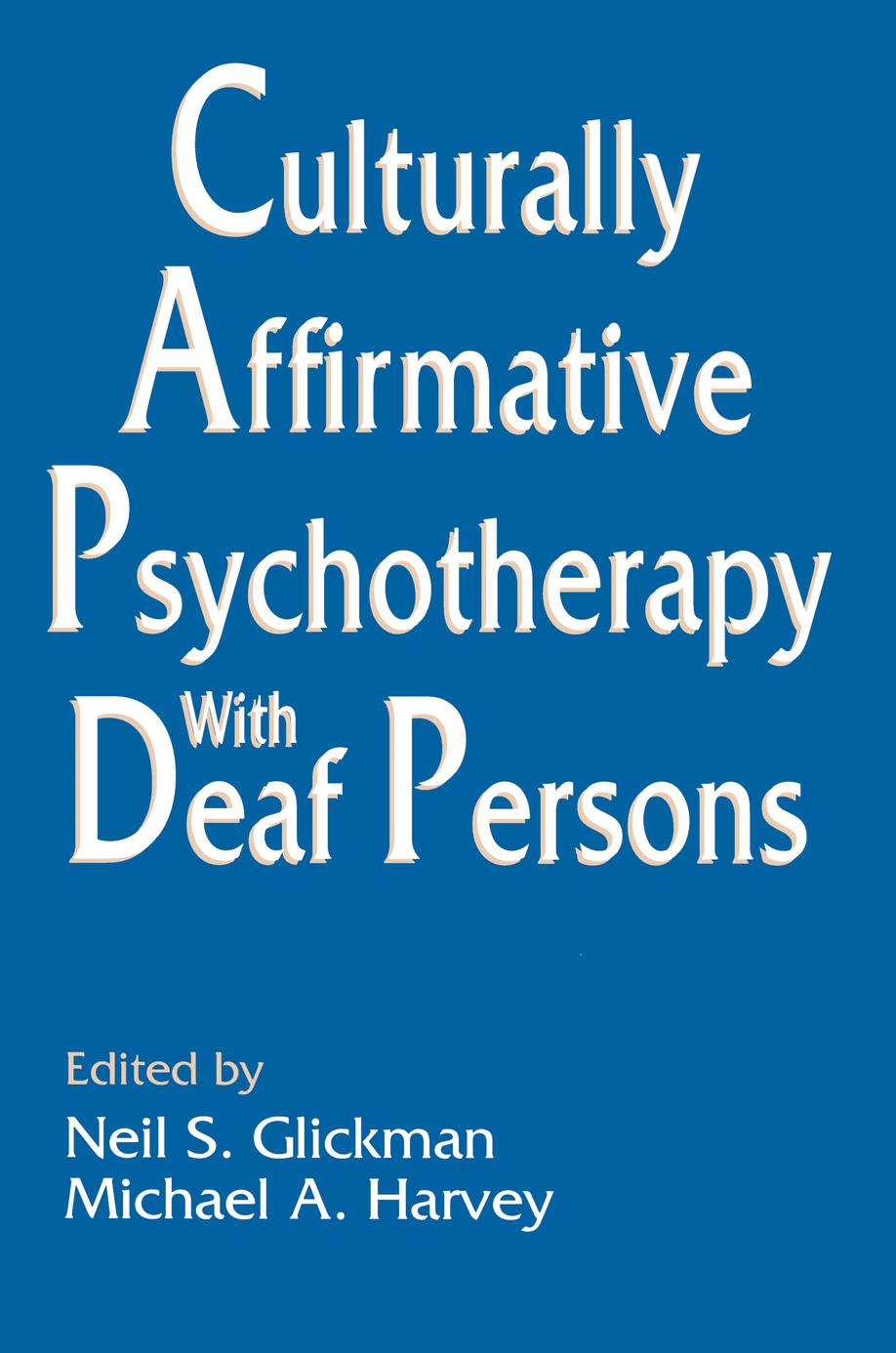
The impetus for this volume is the growing awareness within the mental health and larger community of a culturally affirmative model for understanding and assisting deaf people. In contrast to the "medical-pathological" model which treats deafness as a disability, the "cultural" model guides us to view deaf persons in relation to the deaf community--a group of people with a common language, culture, and collective identity. A primary tenant of culturally affirmative psychotherapy is to understand and respect such differences, not to eradicate them.
The contributors to this volume present a practical and realistic model of providing culturally affirmative counseling and psychotherapy for deaf people. The three dimensions of this model have been delineated by the multicultural counseling literature. These dimensions assert that culturally affirmative psychotherapy with deaf persons requires therapist self-awareness, knowledge of the deaf community/culture, and understanding of culturally-syntonic therapeutic interventions.
The first to exhaustively delineate the implications of the cultural model of deafness for counseling deaf people, this book is essential reading for anyone who works in an educational or counseling capacity with the deaf. This audience includes not only psychotherapists, but also vocational, guidance and residence counselors, teachers, independent living skills specialists, interpreters, and administrators of programs for the deaf.
Betal enkelt med kort, Klarna, Apple Pay eller Google Pay. Ikke fornøyd? Du har alltid 14 dagers angrerett. Les mer i våre vilkår. Har du spørsmål, send oss en e-post på hello@memmo.org.
Memmo gjør det enklere å studere – uansett hvor du er i verden. Hos oss samler du pensumbøker og smarte studieverktøy på ett og samme sted: sammendrag, quizer, podkaster og flashcards. Og så Ted, din studiekompis som svarer på alt du lurer på. Over 50 000 studenter studerer allerede her – bygget for at du skal lære raskere og stresse mindre.