
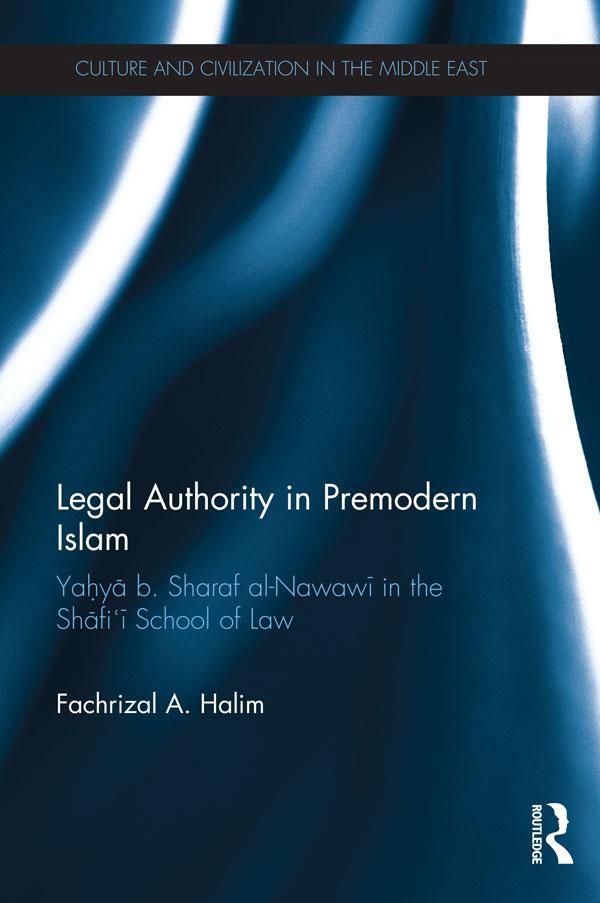
Offering a detailed analysis of the structure of authority in Islamic law, this book focuses on the figure of Yahyā b. Sharaf al-Nawawī, who is regarded as the chief contributor to the legal tradition known as the Shāfi'ī madhhab in traditional Muslim sources, named after Muhammad b. Idrīs al-Shāfi'ī (d. 204/820), the supposed founder of the school of law.
Al-Nawawī’s legal authority is situated in a context where Muslims demanded to stabilize legal disposition that is consistent with the authority of the madhhab, since in premodern Islamic society, the ruling powers did not produce or promulgate law, as was the case in other, monarchic civilizations. Al-Nawawī’s place in the long-term formation of the madhhab is significant for many reasons but for one in particular: his effort in reconciling the two major interpretive communities among the Shāfi'ites, i.e., the tarīqas of the Iraqians and Khurasanians. This book revisits the history of the Shāfi'ī school in the pre-Nawawic era and explores its later development in the post-Nawawic period.
Presenting a comprehensive picture of the structure of authority in Islamic law, specifically within the Shafi’ite legal tradition, this book is an essential resource for students and scholars of Islamic Studies, History and Law.
Betal enkelt med kort, Klarna, Apple Pay eller Google Pay. Ikke fornøyd? Du har alltid 14 dagers angrerett. Les mer i våre vilkår. Har du spørsmål, send oss en e-post på hello@memmo.org.
Memmo gjør det enklere å studere – uansett hvor du er i verden. Hos oss samler du pensumbøker og smarte studieverktøy på ett og samme sted: sammendrag, quizer, podkaster og flashcards. Og så Ted, din studiekompis som svarer på alt du lurer på. Over 50 000 studenter studerer allerede her – bygget for at du skal lære raskere og stresse mindre.