
The most recent conversations about financial instability in International Political Economy have addressed the ongoing financial spasms of the past five years; a global financial spasm unleashed by the 2008 subprime debacle, ongoing Eurozone instability, and general price volatility in securities markets globally.
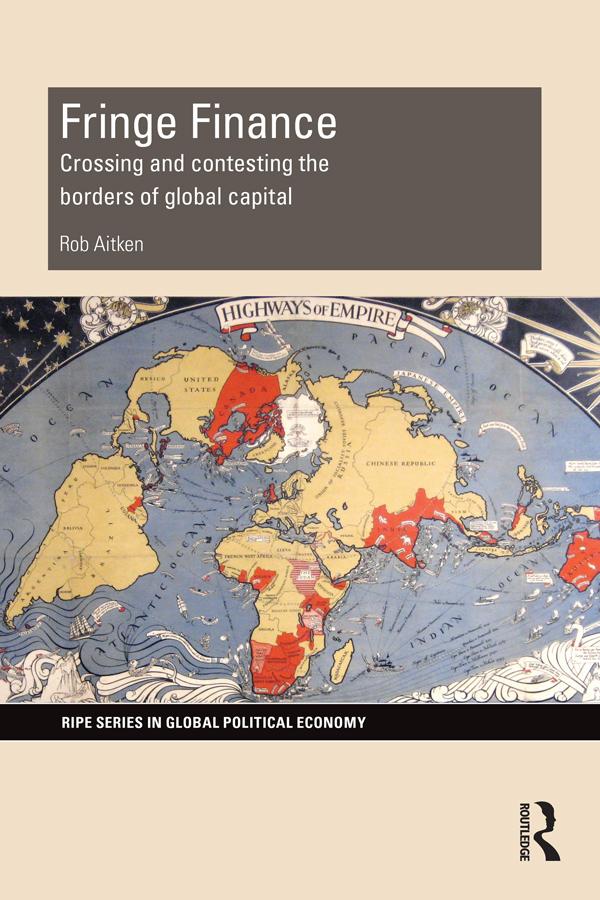
Alongside and as part of these broader spasms, however, has been another key trend—the intensifying reach of global financial markets into and among those populations which live at its very edges. There are increasing, and increasingly profitable, experiments which are explicitly targeted to those without regular access to full or formalized financial practices. This book places the practices of fringe finance in critical context by situating them within a larger set of discussions in the field. Most importantly, this book is part of a much broader attempt in IPE to rethread the study of finance to questions of cultural and social theory in a meaningful manner. Finance is increasingly subjected to innovative forms of social inquiry influenced by a range of diverse methods including governmentality, actor-network theory and cultural economy. By drawing on several strands of social theory, this book contributes to this broader movement in IPE and helps open more space for the continuation of these interdisciplinary conversations.
This work will be of great interest to students and scholars of IPE, development studies and economic sociology.
Betal enkelt med kort, Klarna, Apple Pay eller Google Pay. Ikke fornøyd? Du har alltid 14 dagers angrerett. Les mer i våre vilkår. Har du spørsmål, send oss en e-post på hello@memmo.org.
Memmo gjør det enklere å studere – uansett hvor du er i verden. Hos oss samler du pensumbøker og smarte studieverktøy på ett og samme sted: sammendrag, quizer, podkaster og flashcards. Og så Ted, din studiekompis som svarer på alt du lurer på. Over 50 000 studenter studerer allerede her – bygget for at du skal lære raskere og stresse mindre.