
Før Memmo var notatene mine spredt overalt i PDF-er. Nå samler et arbeidsområde alt på ett sted – jeg ser akkurat hva som gjenstår å studere.
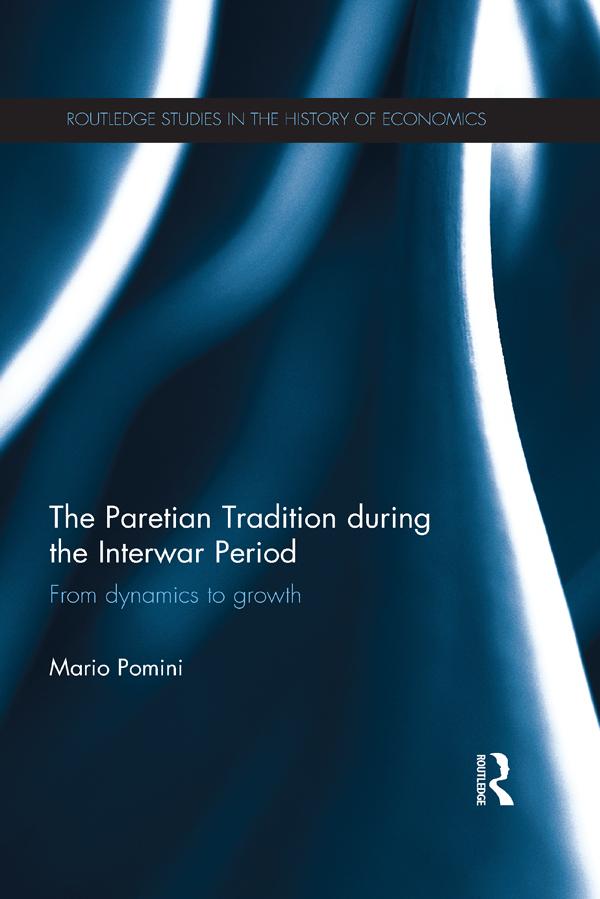
The years in-between the two World Wars were a crucial period for the building of economic dynamics as an autonomous field. Different competing research programs arose at international level. Great progress was achieved by studies on the business cycle, with the first statistical applications. Outside the theory of the business cycle, a significant line of inquiry was that pursued at the end of the 1930s by Hicks and Samuelson. This period also saw the formulation of another approach to formal economic dynamics which in the 1930s represented the frontier of research from the analytical point of view. It was an approach which set the notion of equilibrium at the basis of dynamics, exactly as in the case of statics, thus leading to the definition of a dynamic equilibrium approach. The aim of this volume is to take into consideration this original research field sparked from Pareto’s works and initially developed during the 1920s in the United States by two American mathematicians, G. Evans and C. Ross.
In the 1930s, the concept of dynamic equilibrium became the main research field of the Pareto school which gave its most important contributions in this field. The Paretian economists as Amoroso, de Pietri Tonelli, Sensini, and the younger, such as Bordin, Palomba, La Volpe, Fossati and Zaccagnini, for the most part students of the former, developed this approach in many directions. The theory of dynamic equilibrium reached remarkable results from an analytical viewpoint through the wide application of the functional calculus, thus anticipating a perspective which was taken into consideration in the 1960s with the theory of optimal growth. Despite the Pareto school’s relevance, it remained widely unknown, not only at international level, but also in Italy. Recently, it has been object of renewed interest. This present work aims at reconstructing the fundamental contributions offered by the Pareto school in forming the economic dynamics theory.
Før Memmo var notatene mine spredt overalt i PDF-er. Nå samler et arbeidsområde alt på ett sted – jeg ser akkurat hva som gjenstår å studere.
Memmos sammendrag er gull før eksamen. Jeg slipper å lese 800 sider to uker før – bare det viktigste.
AI-chatten har reddet meg kvelden før eksamen mer enn én gang. Jeg bare spør til jeg forstår – slipper å vente på svar i en studiegruppe.
Quizene treffer akkurat det jeg trenger å vite. Memmo holder styr på hva jeg sliter med – så jeg øver bare på det som er verdt det.
Flashcards med repetisjon over tid er magi. Memmo vet når jeg er i ferd med å glemme noe og viser det igjen.
AI-podkastene er min favoritt. Jeg lytter på vei til skolen og får en repetisjon uten å sitte foran en datamaskin.

Handbok i kvalitativa metoder
281 kr

Hållbar utveckling: en introduktion för ingenjörer och andra problemlösare
334 kr

Brymans Samhällsvetenskapliga metoder
390 kr

Projektledning
491 kr

Den orättvisa hälsan: om socioekonomiska skillnader i hälsa och livslängd
326 kr

Organizational Leadership
429 kr

Vetenskapsteori för nybörjare
196 kr

På väg mot läraryrket
172 kr

Det sociala livet i skolan: Socialpsykologiska perspektiv
253 kr

Betygsättningens didaktik
151 kr

Personality
402 kr

Studying Leadership
404 kr

Managing Innovation
477 kr

Introduktion till samhällsvetenskaplig metod
347 kr

The Psychology of Sex and Gender
698 kr

Evidens och kunskap för socialt arbete
207 kr

Introduction to Leadership
605 kr