
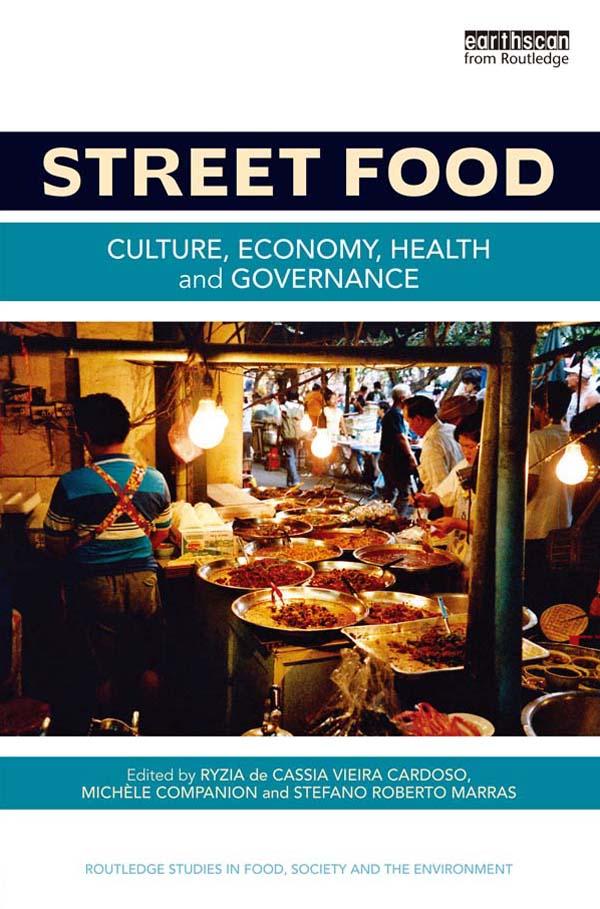
Prepared foods, for sale in streets, squares or markets, are ubiquitous around the world and throughout history. This volume is one of the first to provide a comprehensive social science perspective on street food, illustrating its immense cultural diversity and economic significance, both in developing and developed countries.
Key issues addressed include: policy, regulation and governance of street food and vendors; production and trade patterns ranging from informal subsistence to modern forms of enterprise; the key role played by female vendors; historical roots and cultural meanings of selling and eating food in the street; food safety and nutrition issues. Many chapters provide case studies from specific cities in different regions of the world. These include North America (Atlanta, Philadelphia, Portland, Toronto, Vancouver), Central and South America (Bogota, Buenos Aires, La Paz, Lima, Mexico City, Montevideo, Santiago, Salvador da Bahia), Asia (Bangkok, Dhaka, Penang), Africa (Accra, Abidjan, Bamako, Freetown, Mozambique) and Europe (Amsterdam).
Betal enkelt med kort, Klarna, Apple Pay eller Google Pay. Ikke fornøyd? Du har alltid 14 dagers angrerett. Les mer i våre vilkår. Har du spørsmål, send oss en e-post på hello@memmo.org.
Memmo gjør det enklere å studere – uansett hvor du er i verden. Hos oss samler du pensumbøker og smarte studieverktøy på ett og samme sted: sammendrag, quizer, podkaster og flashcards. Og så Ted, din studiekompis som svarer på alt du lurer på. Over 50 000 studenter studerer allerede her – bygget for at du skal lære raskere og stresse mindre.