
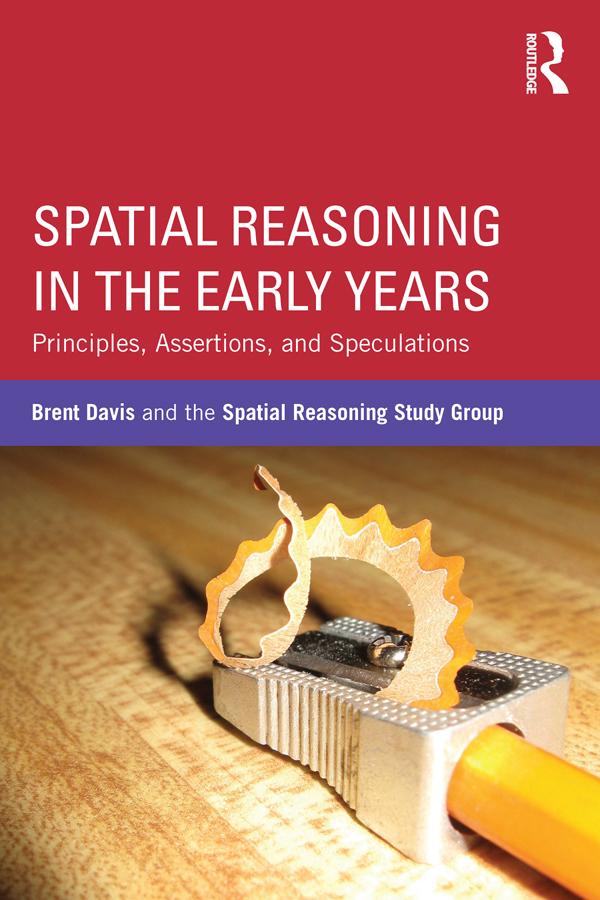
Over the past several years, "spatial reasoning" has gained renewed prominence among mathematics educators, as spatial skills are proving to be not just essential to mathematical understanding but also strong predictors of future success beyond the classroom in fields such as science, technology, and engineering. By exploring both primary and emergent dimensions, Spatial Reasoning in the Early Years helps define the concept of spatial reasoning and provides compelling evidence of the need for a clear focus within early education specifically. The authors review the research, look across current theories, and investigate implications for contemporary school mathematics pedagogy as they identify areas of inquiry necessary to bring a stronger spatial reasoning emphasis into the classroom.
The book contains many classroom- or workshop-based vignettes, highlighting the complexity of spatial reasoning in educational practice, providing an in-depth analysis of spatial reasoning as it applies to classroom practice, and offering new ways of framing lessons to help young students hone their spatial reasoning abilities. The book concludes with a forward-looking agenda that contributes to developing a greater understanding of the role spatial reasoning plays in educational contexts and beyond. Supported by plentiful visual representations, Spatial Reasoning in the Early Years skillfully integrates the conceptual and the concrete, making this text a dynamic and accessible resource.
Betal enkelt med kort, Klarna, Apple Pay eller Google Pay. Ikke fornøyd? Du har alltid 14 dagers angrerett. Les mer i våre vilkår. Har du spørsmål, send oss en e-post på hello@memmo.org.
Memmo gjør det enklere å studere – uansett hvor du er i verden. Hos oss samler du pensumbøker og smarte studieverktøy på ett og samme sted: sammendrag, quizer, podkaster og flashcards. Og så Ted, din studiekompis som svarer på alt du lurer på. Over 50 000 studenter studerer allerede her – bygget for at du skal lære raskere og stresse mindre.