
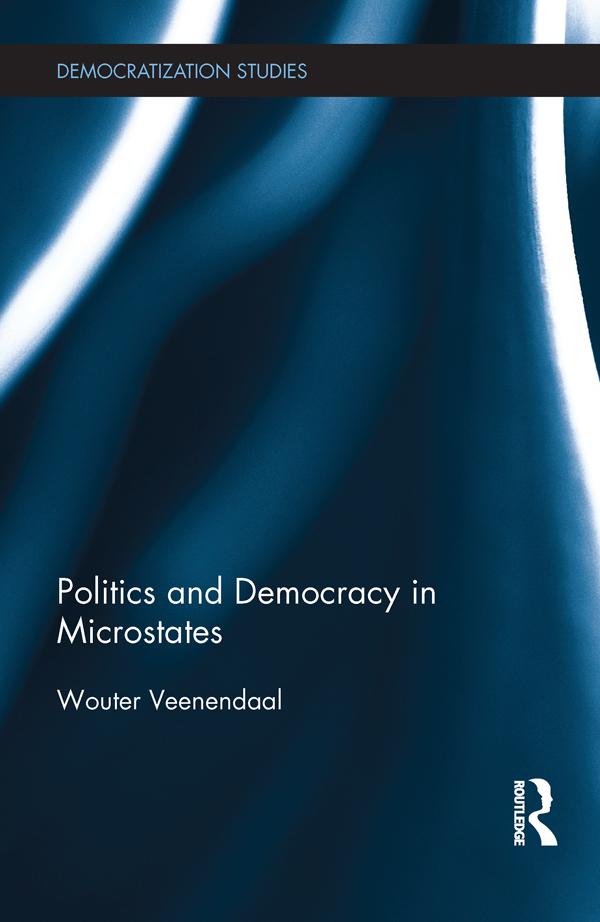
Why are small states statistically more likely to have a democratic political system? By addressing this question from a qualitative and comparative methodological angle, this book analyses the effects of a small population size on political competition and participation. By comparing the four microstates of San Marino (Europe), St. Kitts and Nevis (Caribbean), Seychelles (Africa), and Palau (Oceania), it provides fresh and stimulating insight, concluding that the political dynamics of microstates are not as democratic as commonly believed. Instead, it is found in all four cases that smallness results in personalistic politics, dominance of the political executive, patron-client relations between citizens and politicians, and the circumvention of formal political institutions. In addition, the book suggests that the study of formal institutions provides an incomplete image of microstate democracy and that informal characteristics of politics in microstates also need to be explored in order to better explain the influence of smallness on democracy.
This book will be of key interest to scholars and students of democracy, democratization, regional and decentralization studies and comparative politics.
Betal enkelt med kort, Klarna, Apple Pay eller Google Pay. Ikke fornøyd? Du har alltid 14 dagers angrerett. Les mer i våre vilkår. Har du spørsmål, send oss en e-post på hello@memmo.org.
Memmo gjør det enklere å studere – uansett hvor du er i verden. Hos oss samler du pensumbøker og smarte studieverktøy på ett og samme sted: sammendrag, quizer, podkaster og flashcards. Og så Ted, din studiekompis som svarer på alt du lurer på. Over 50 000 studenter studerer allerede her – bygget for at du skal lære raskere og stresse mindre.