
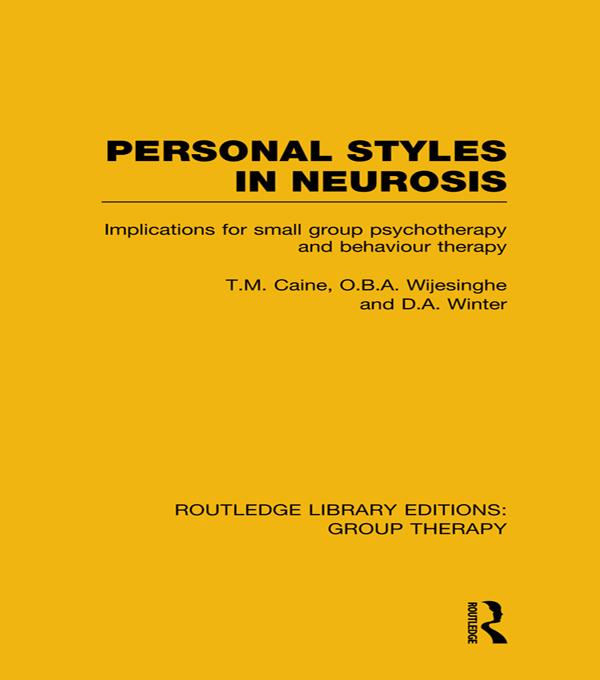
Originally published in 1981, the inadequacies of the ‘medical model’ for the understanding and psychological treatment of neuroses were widely recognized. A number of alternative approaches had arisen in response, but most of the models were theoretical, and little experimental support was documented.
One of the most pressing needs at the time was for a system of classification which could predict the behaviour of different types of neurotic patient under different treatments, and thus provide a framework for the selection of patients for small group psychotherapy and for behaviour therapy. The authors of this title develop such a framework, involving the matching of patient, therapist and treatment according to certain adjustment strategies such as ‘direction of interest’, ‘conservatism’, ‘convergent-divergent thinking’, ‘openness to inner experience’ and ‘control’. The ‘personal style’ of an individual is defined by these strategies, and by the patient’s expectations from treatment.
The authors collected a considerable amount of original research material over many years, and their evidence demonstrates the fundamental importance of ‘personal style’ in treatment allocation and response. The new approach which they propose will be of interest not only to academic psychologists but to those in the mental health professions actively engaged in psychotherapy and behaviour therapy.
Betal enkelt med kort, Klarna, Apple Pay eller Google Pay. Ikke fornøyd? Du har alltid 14 dagers angrerett. Les mer i våre vilkår. Har du spørsmål, send oss en e-post på hello@memmo.org.
Memmo gjør det enklere å studere – uansett hvor du er i verden. Hos oss samler du pensumbøker og smarte studieverktøy på ett og samme sted: sammendrag, quizer, podkaster og flashcards. Og så Ted, din studiekompis som svarer på alt du lurer på. Over 50 000 studenter studerer allerede her – bygget for at du skal lære raskere og stresse mindre.