
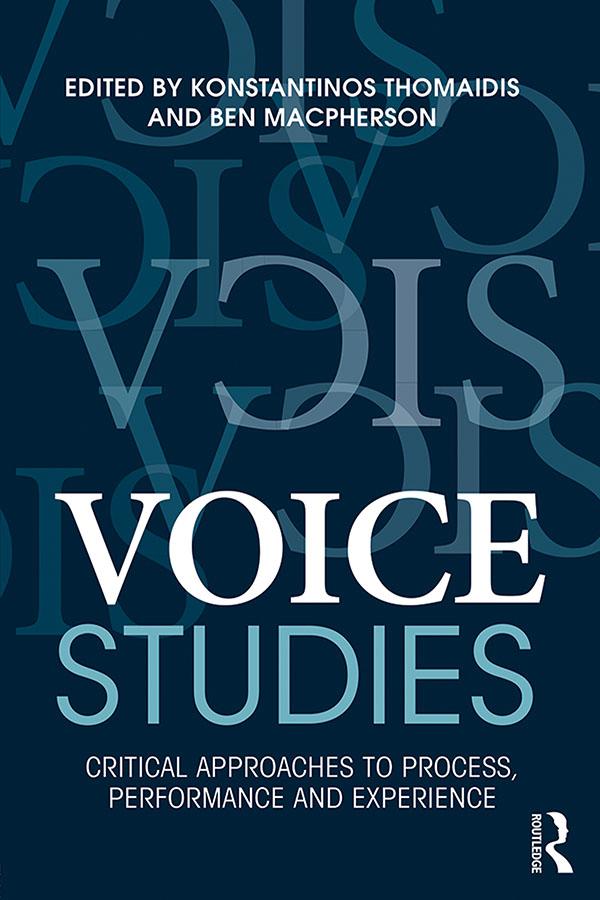
Voice Studies brings together leading international scholars and practitioners, to re-examine what voice is, what voice does, and what we mean by "voice studies" in the process and experience of performance. This dynamic and interdisciplinary publication draws on a broad range of approaches, from composing and voice teaching through to psychoanalysis and philosophy, including:
- voice training from the Alexander Technique to practice-as-research;
- operatic and extended voices in early baroque and contemporary underwater singing;
- voices across cultures, from site-specific choral performance in Kentish mines and Australian sound art, to the laments of Kraho Indians, Korean pansori and Javanese wayang;
- voice, embodiment and gender in Robertson’s 1798 production of Phantasmagoria, Cathy Berberian radio show, and Romeo Castellucci’s theatre;
- perceiving voice as a composer, listener, or as eavesdropper;
- voice, technology and mobile apps.
With contributions spanning six continents, the volume considers the processes of teaching or writing for voice, the performance of voice in theatre, live art, music, and on recordings, and the experience of voice in acoustic perception and research. It concludes with a multifaceted series of short provocations that simply revisit the core question of the whole volume: what is voice studies?
Betal enkelt med kort, Klarna, Apple Pay eller Google Pay. Ikke fornøyd? Du har alltid 14 dagers angrerett. Les mer i våre vilkår. Har du spørsmål, send oss en e-post på hello@memmo.org.
Memmo gjør det enklere å studere – uansett hvor du er i verden. Hos oss samler du pensumbøker og smarte studieverktøy på ett og samme sted: sammendrag, quizer, podkaster og flashcards. Og så Ted, din studiekompis som svarer på alt du lurer på. Over 50 000 studenter studerer allerede her – bygget for at du skal lære raskere og stresse mindre.