
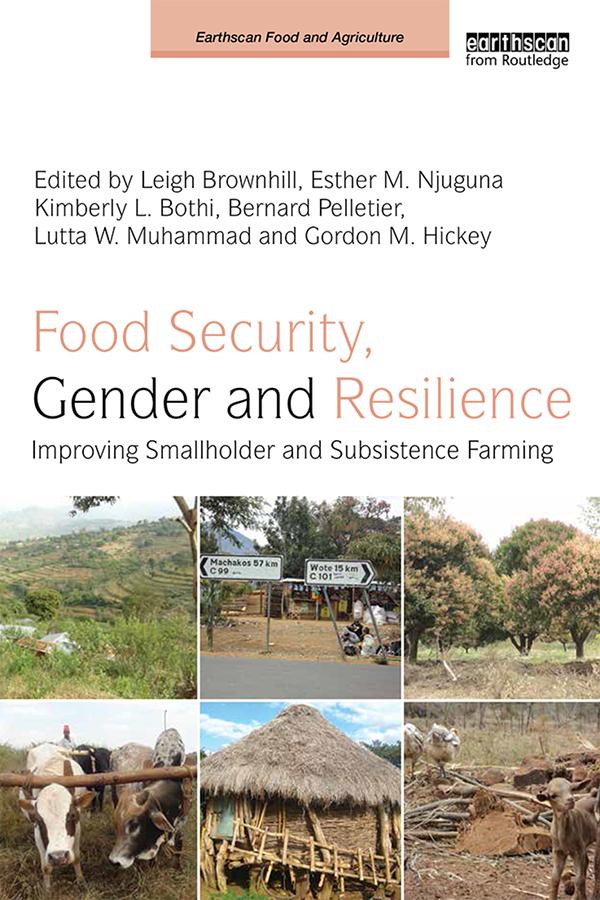
Through the integration of gender analysis into resilience thinking, this book shares field-based research insights from a collaborative, integrated project aimed at improving food security in subsistence and smallholder agricultural systems. The scope of the book is both local and multi-scalar. The gendered resilience framework, illustrated here with detailed case studies from semi-arid Kenya, is shown to be suitable for use in analysis in other geographic regions and across disciplines. The book examines the importance of gender equity to the strengthening of socio-ecological resilience. Case studies reflect multidisciplinary perspectives and focus on a range of issues, from microfinance to informal seed systems.
The book’s gender perspective also incorporates consideration of age or generational relations and cultural dimensions in order to embrace the complexity of existing socio-economic realities in rural farming communities. The issue of succession of farmland has become a general concern, both to farmers and to researchers focused on building resilient farming systems. Building resilience here is shown to involve strengthening households’ and communities’ overall livelihood capabilities in the face of ongoing climate change, global market volatility and political instability.
Betal enkelt med kort, Klarna, Apple Pay eller Google Pay. Ikke fornøyd? Du har alltid 14 dagers angrerett. Les mer i våre vilkår. Har du spørsmål, send oss en e-post på hello@memmo.org.
Memmo gjør det enklere å studere – uansett hvor du er i verden. Hos oss samler du pensumbøker og smarte studieverktøy på ett og samme sted: sammendrag, quizer, podkaster og flashcards. Og så Ted, din studiekompis som svarer på alt du lurer på. Over 50 000 studenter studerer allerede her – bygget for at du skal lære raskere og stresse mindre.