
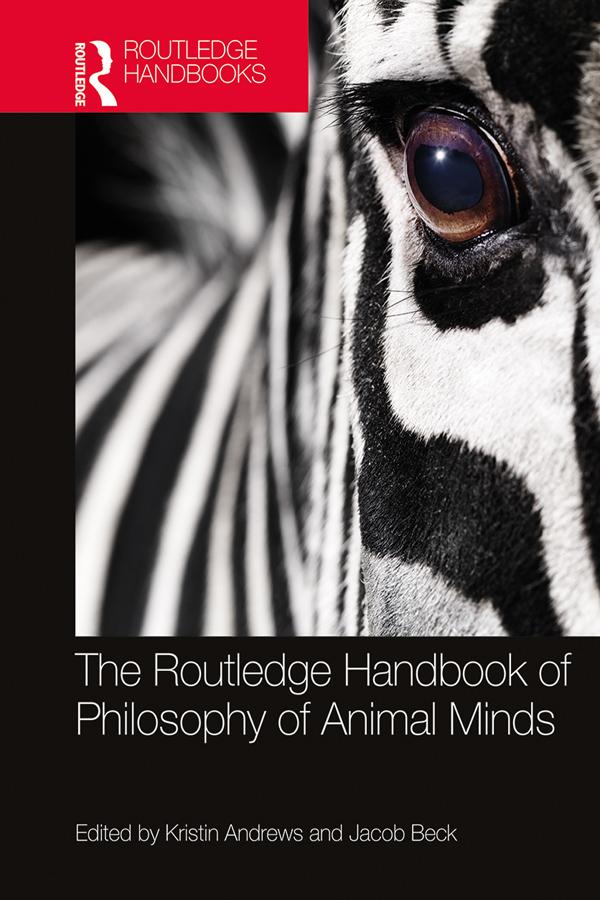
While philosophers have been interested in animals since ancient times, in the last few decades the subject of animal minds has emerged as a major topic in philosophy. The Routledge Handbook of Philosophy of Animal Minds is an outstanding reference source to the key topics, problems, and debates in this exciting subject and is the first collection of its kind. Comprising nearly fifty chapters by a team of international contributors, the Handbook is divided into eight parts:
- Mental representation
- Reasoning and metacognition
- Consciousness
- Mindreading
- Communication
- Social cognition and culture
- Association, simplicity, and modeling
- Ethics.
Within these sections, central issues, debates, and problems are examined, including: whether and how animals represent and reason about the world; how animal cognition differs from human cognition; whether animals are conscious; whether animals represent their own mental states or those of others; how animals communicate; the extent to which animals have cultures; how to choose among competing models and explanations of animal behavior; and whether animals are moral agents and/or moral patients.
The Routledge Handbook of Philosophy of Animal Minds is essential reading for students and researchers in philosophy of mind, philosophy of psychology, ethics, and related disciplines such as ethology, biology, psychology, linguistics, and anthropology.
Betal enkelt med kort, Klarna, Apple Pay eller Google Pay. Ikke fornøyd? Du har alltid 14 dagers angrerett. Les mer i våre vilkår. Har du spørsmål, send oss en e-post på hello@memmo.org.
Memmo gjør det enklere å studere – uansett hvor du er i verden. Hos oss samler du pensumbøker og smarte studieverktøy på ett og samme sted: sammendrag, quizer, podkaster og flashcards. Og så Ted, din studiekompis som svarer på alt du lurer på. Over 50 000 studenter studerer allerede her – bygget for at du skal lære raskere og stresse mindre.