
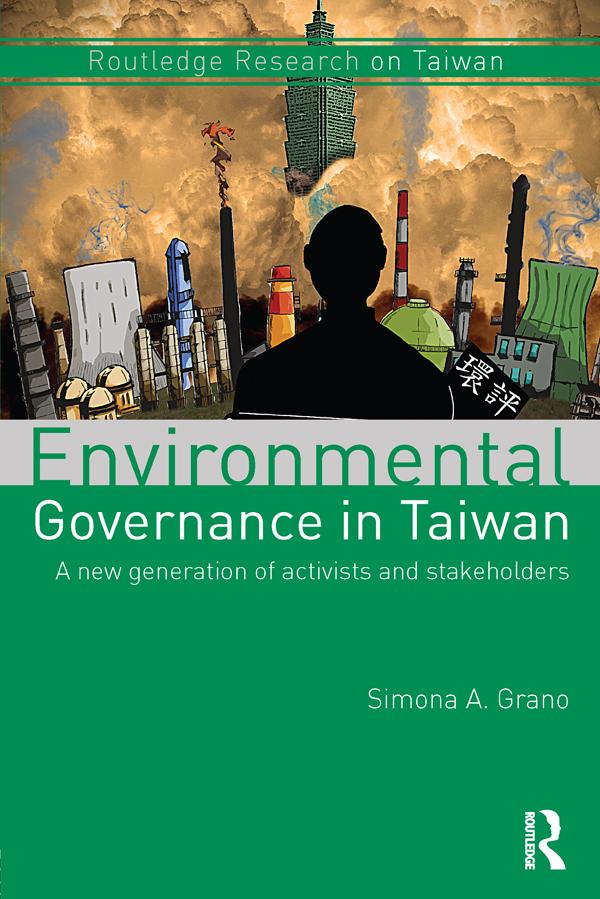
Three decades of rapid industrialization until the lifting of martial law in 1987, with little or no concern for the environment, have made Taiwan’s environmental degradation a serious problem. In the past twenty years, Taiwan has seen a surge of environmental organizations, which to a certain degree have enjoyed a remarkable success in fighting polluting industries or affecting policies on behalf of the environment.
This book aims to analyse environmental governance mechanisms and actors in Taiwan through a multi-disciplinary research approach. Based on extensive and original research, it includes four different case studies, which have all taken place since 2011. It focuses on four major elements of governance - specifically norms, actors, processes, and outcomes - to examine Taiwan’s national and local environmental governance in the post-2008 period. The book shows how the painful lessons Taiwan has learned throughout its transition should be of interest to other developing countries, illustrating how these positive transformations have managed to bring about a more ecologically friendly mode of economic development.
Demonstrating that the battle to further ecological sustainability is also a battle to further democratisation, this book will be of interest to students and scholars of Taiwan Studies, Developmental Studies and Environmental Studies.
Betal enkelt med kort, Klarna, Apple Pay eller Google Pay. Ikke fornøyd? Du har alltid 14 dagers angrerett. Les mer i våre vilkår. Har du spørsmål, send oss en e-post på hello@memmo.org.
Memmo gjør det enklere å studere – uansett hvor du er i verden. Hos oss samler du pensumbøker og smarte studieverktøy på ett og samme sted: sammendrag, quizer, podkaster og flashcards. Og så Ted, din studiekompis som svarer på alt du lurer på. Over 50 000 studenter studerer allerede her – bygget for at du skal lære raskere og stresse mindre.