
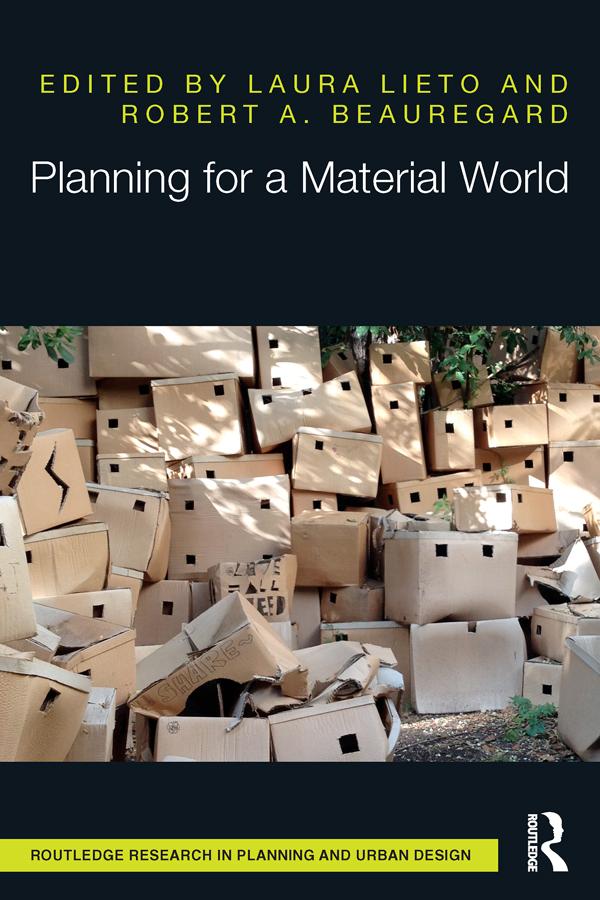
Today, urban scholars think of cities and regions as evolving through networks of human associations, technologies, and natural ecologies. This being the case, planners are faced with the task of navigating a profoundly material world. Planning with and for humans alone is unacceptable: in the unfolding of urban processes, non-human things cannot be ignored. This inclusive vision has consequences for how planners envision the connections among norms, technologies and life-worlds as well as how they design and implement their plans.
The contributors to this volume utilize a variety of examples – ecologically-sensitive, regional planning in Naples (Italy); congestion pricing in New York City; and public participation in Europe, among others – to explore how planners engage a heterogeneous and restless world. Inspired by assemblage thinking and actor-network theory, each chapter draws on this "new materialism" to acknowledge, in quite pragmatic ways, that spatial politics is a process of becoming that is inseparable from the materiality of urban practices.
Betal enkelt med kort, Klarna, Apple Pay eller Google Pay. Ikke fornøyd? Du har alltid 14 dagers angrerett. Les mer i våre vilkår. Har du spørsmål, send oss en e-post på hello@memmo.org.
Memmo gjør det enklere å studere – uansett hvor du er i verden. Hos oss samler du pensumbøker og smarte studieverktøy på ett og samme sted: sammendrag, quizer, podkaster og flashcards. Og så Ted, din studiekompis som svarer på alt du lurer på. Over 50 000 studenter studerer allerede her – bygget for at du skal lære raskere og stresse mindre.