
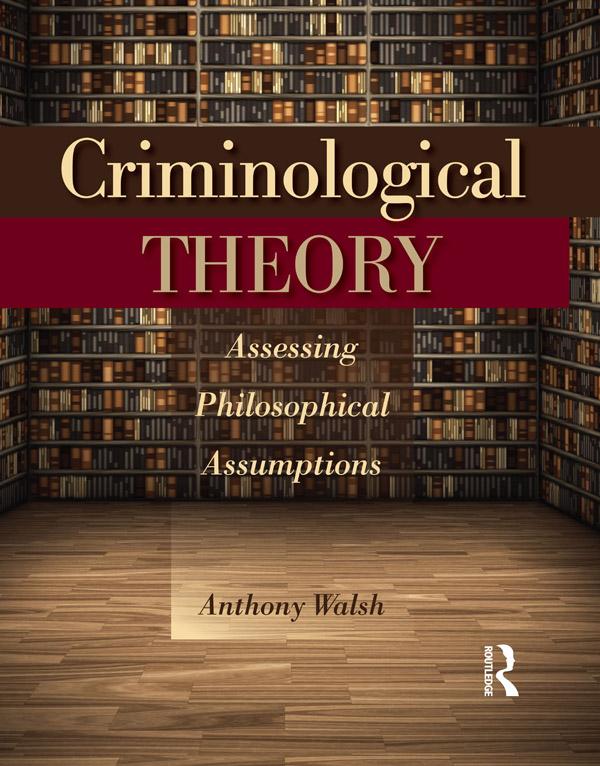
Criminologists can benefit from questioning the underlying assumptions upon which they rest their work. Philosophy has the ability to clarify our thoughts, inform us of why we think about things the way we do, solve contradictions in our thinking we never knew existed, and even dissolve some dichotomies we thought were cast in stone. One of those dichotomies is free will vs. determinism. Criminology must reckon with both free will and agency, as posited by some theories, and determinism, as posited by others—including the ever more influential fields of genetics and biosocial criminology. Criminological Theory: Assessing Philosophical Assumptions examines philosophical concepts such as these in the context of important criminological theories or issues that are foundational but not generally considered in the literature on this topic. The uniqueness of this treatment of criminological theory is that rather than reporting what this person or that has said about a particular theory, Walsh exposes the philosophical assumptions underlying the theory. Students and scholars learn to clarify their own biases and better analyze the implications of a broad range of theories of crime and justice.
Betal enkelt med kort, Klarna, Apple Pay eller Google Pay. Ikke fornøyd? Du har alltid 14 dagers angrerett. Les mer i våre vilkår. Har du spørsmål, send oss en e-post på hello@memmo.org.
Memmo gjør det enklere å studere – uansett hvor du er i verden. Hos oss samler du pensumbøker og smarte studieverktøy på ett og samme sted: sammendrag, quizer, podkaster og flashcards. Og så Ted, din studiekompis som svarer på alt du lurer på. Over 50 000 studenter studerer allerede her – bygget for at du skal lære raskere og stresse mindre.