
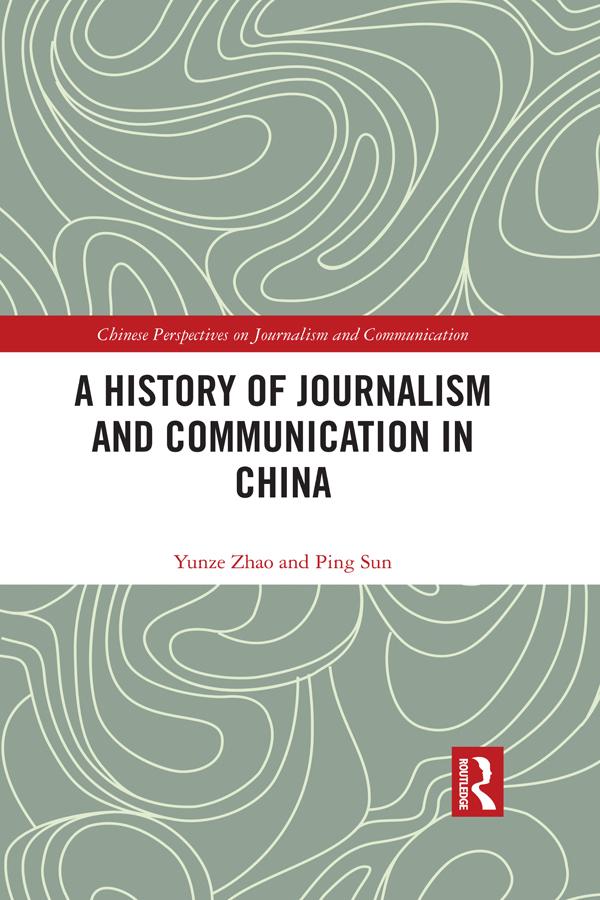
From a modern perspective, journalism is highly relevant to modern society, along with the emergence of mass printing system and professionalisation. This book, however, expands the meaning of journalism and views it as a social process. It will not only explore the roots and development of Chinese journalism and communication, but also demonstrate how Chinese journalism and communication interact and struggle with social culture and politics.
Arranged in chronological order mainly, this book examines the initial development of Chinese journalism in ancient times in chapter 1, which from then manifested strong political attributes. After the Opium War in 1840, missionaries and businessmen from the West started to set up newspapers and periodicals in China, which brought about the birth of China’s modern journalism industry. Then China’s private newspapers and political party’s press are studied, which are closely linked with political revolutions and have a far-reaching impact on modern Chinese society. What happened to Chinese journalism and communication after the founding of People’s Republic of China in 1949? This book reviews the newspaper reforms, and studies the great negative impacts brought by "Cultural Revolution". Noteworthy news phenomena after the reform and opening-up are also covered.
This book will appeal to scholars and students in journalism, communication and Chinese studies. Readers interested in Chinese society and modern Chinese history will also be attracted by it.
Betal enkelt med kort, Klarna, Apple Pay eller Google Pay. Ikke fornøyd? Du har alltid 14 dagers angrerett. Les mer i våre vilkår. Har du spørsmål, send oss en e-post på hello@memmo.org.
Memmo gjør det enklere å studere – uansett hvor du er i verden. Hos oss samler du pensumbøker og smarte studieverktøy på ett og samme sted: sammendrag, quizer, podkaster og flashcards. Og så Ted, din studiekompis som svarer på alt du lurer på. Over 50 000 studenter studerer allerede her – bygget for at du skal lære raskere og stresse mindre.