
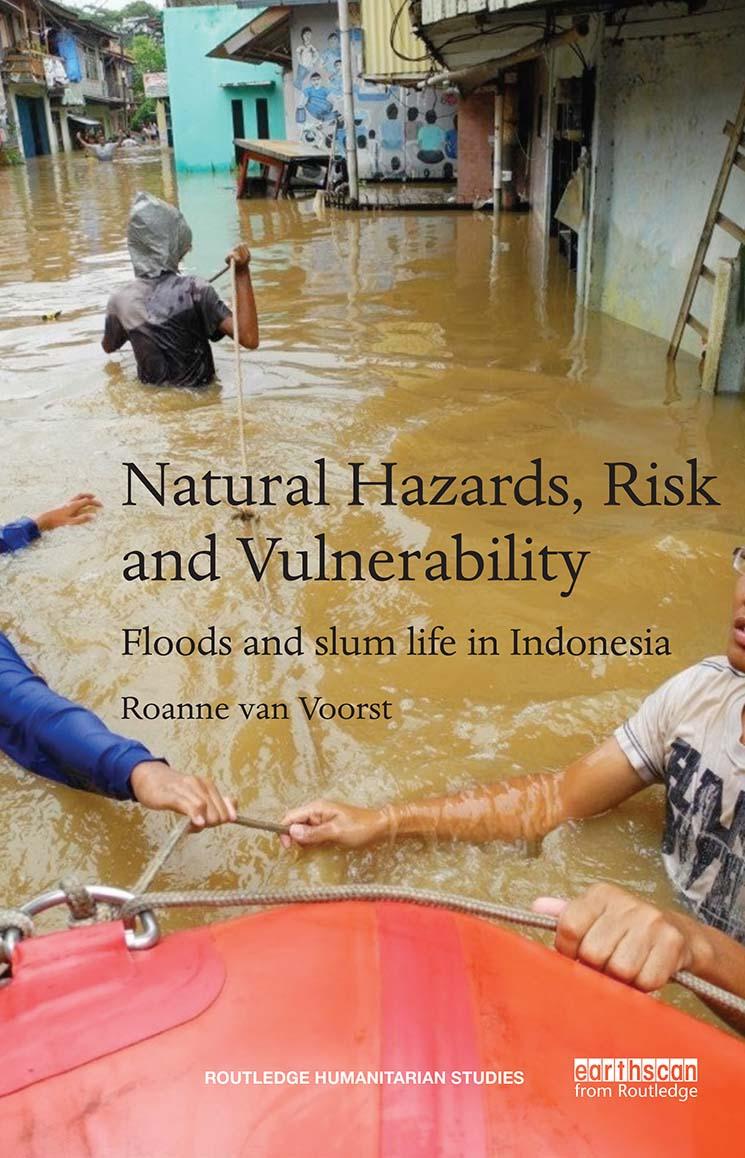
Different people handle risk in different ways. The current lack of understanding about this heterogeneity in risk behaviour makes it difficult to intervene effectively in risk-prone communities.
Natural Hazards, Risk and Vulnerability offers a unique insight in the everyday life of a group of riverbank settlers in Jakarta - one of the most vulnerable areas worldwide in terms of exposure to natural hazards. Based on long-term fieldwork, the book portrays the often creative and innovative ways in which slum dwellers cope with recurrent floods. The book shows that behaviour that is often described as irrational or ineffective by outside experts can be highly pragmatic and often effective. This book argues that human risk behaviour cannot be explained by the risk itself, but instead by seemingly unrelated factors such as trust in authorities and aid-institutions and unequal power structures. By considering a risk as a lens that exposes these factors, a completely new type of analysis is proposed that offers useful insights for everyone concerned about how people cope with the currently increasing amount of natural hazard.
This is a valuable resource for academics, researchers and policy makers in the areas of risk studies, disaster and natural hazard, urban studies, anthropology, development, Southeast Asian studies and Indonesia studies.
Betal enkelt med kort, Klarna, Apple Pay eller Google Pay. Ikke fornøyd? Du har alltid 14 dagers angrerett. Les mer i våre vilkår. Har du spørsmål, send oss en e-post på hello@memmo.org.
Memmo gjør det enklere å studere – uansett hvor du er i verden. Hos oss samler du pensumbøker og smarte studieverktøy på ett og samme sted: sammendrag, quizer, podkaster og flashcards. Og så Ted, din studiekompis som svarer på alt du lurer på. Over 50 000 studenter studerer allerede her – bygget for at du skal lære raskere og stresse mindre.