
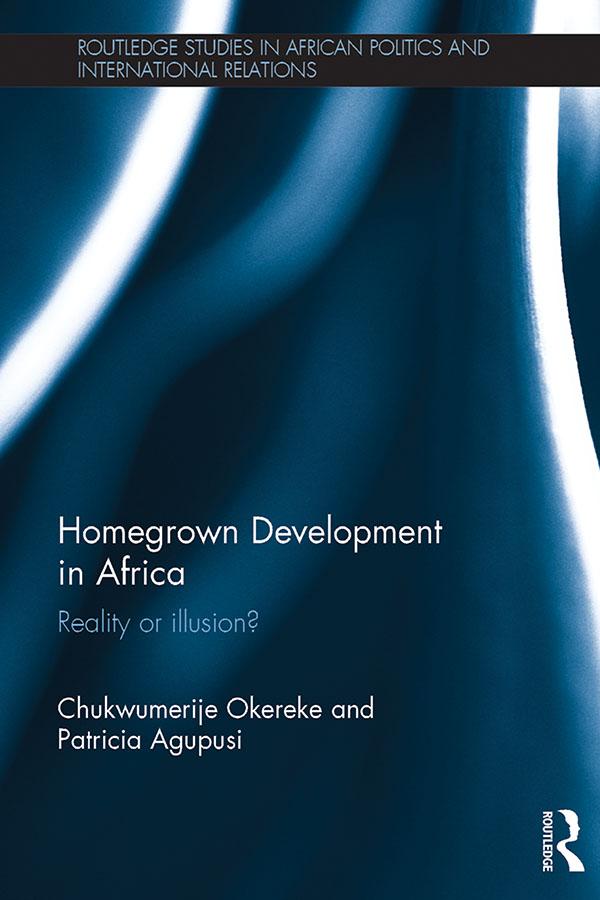
Internationally driven development programmes have not been entirely successful in transforming the economic status of African countries. Since the late 1990s many African countries have started to take initiatives to develop an integrated framework that tackles poverty and promotes socio-economic development in their respective countries.
This book provides a critical evaluation of ‘homegrown’ development initiatives in Africa, set up as alternatives to externally sponsored development. Focusing specifically on Ghana, Nigeria, South Africa and Kenya, the book takes a qualitative and comparative approach to offer the first ever in-depth analysis of indigenous development programmes. It examines:
- How far African states have moved towards more homegrown development strategies.
- The effects of the shift towards African homegrown socio-economic development strategies and the conditions needed to enhance their success and sustainability.
This book will be of interest to students and scholars of development studies, international politics, political economy, public policy and African politics, sociology and economics.
Betal enkelt med kort, Klarna, Apple Pay eller Google Pay. Ikke fornøyd? Du har alltid 14 dagers angrerett. Les mer i våre vilkår. Har du spørsmål, send oss en e-post på hello@memmo.org.
Memmo gjør det enklere å studere – uansett hvor du er i verden. Hos oss samler du pensumbøker og smarte studieverktøy på ett og samme sted: sammendrag, quizer, podkaster og flashcards. Og så Ted, din studiekompis som svarer på alt du lurer på. Over 50 000 studenter studerer allerede her – bygget for at du skal lære raskere og stresse mindre.