
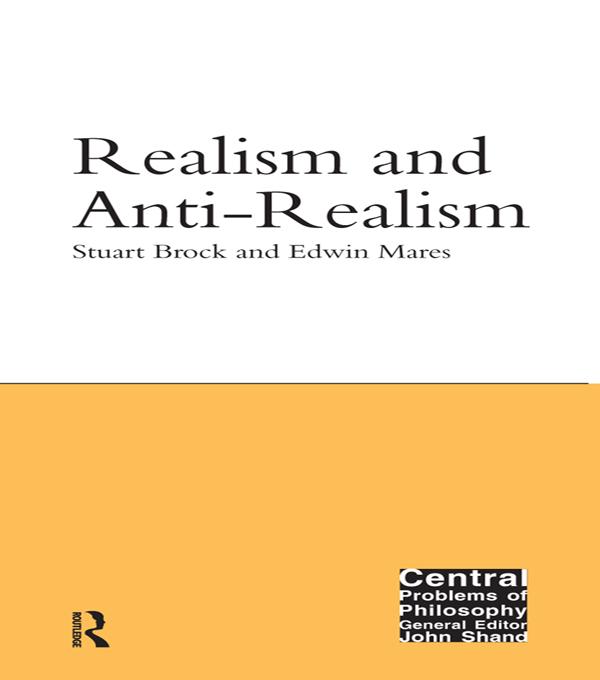
There are a bewildering variety of ways the terms "realism" and "anti-realism" have been used in philosophy and furthermore the different uses of these terms are only loosely connected with one another. Rather than give a piecemeal map of this very diverse landscape, the authors focus on what they see as the core concept: realism about a particular domain is the view that there are facts or entities distinctive of that domain, and their existence and nature is in some important sense objective and mind-independent. The authors carefully set out and explain the different realist and anti-realist positions and arguments that occur in five key domains: science, ethics, mathematics, modality and fictional objects. For each area the authors examine the various styles of argument in support of and against realism and anti-realism, show how these different positions and arguments arise in very different domains, evaluate their success within these fields, and draw general conclusions about these assorted strategies. Error theory, fictionalism, non-cognitivism, relativism and response-dependence are taken as the most important positions in opposition to the realist and these are explored in depth. Suitable for advanced level undergraduates, the book offers readers a clear introduction to a subject central to much contemporary work in metaphysics, epistemology and philosophy of language.
Betal enkelt med kort, Klarna, Apple Pay eller Google Pay. Ikke fornøyd? Du har alltid 14 dagers angrerett. Les mer i våre vilkår. Har du spørsmål, send oss en e-post på hello@memmo.org.
Memmo gjør det enklere å studere – uansett hvor du er i verden. Hos oss samler du pensumbøker og smarte studieverktøy på ett og samme sted: sammendrag, quizer, podkaster og flashcards. Og så Ted, din studiekompis som svarer på alt du lurer på. Over 50 000 studenter studerer allerede her – bygget for at du skal lære raskere og stresse mindre.
Du vil kanskje også like
Kjøp boken0