
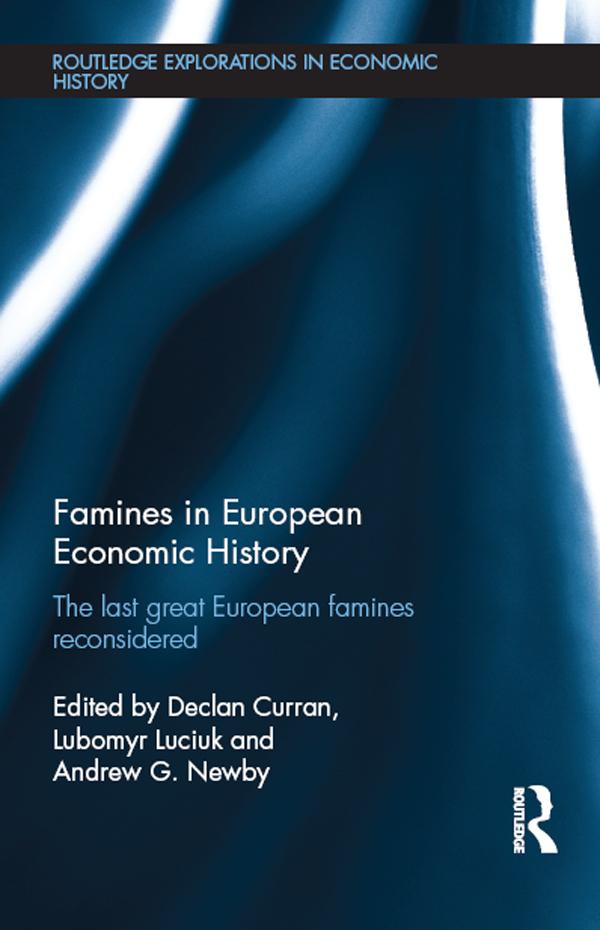
This volume explores economic, social, and political dimensions of three catastrophic famines which struck mid-nineteenth and early-twentieth century Europe; the Irish Famine (An Gorta Mór ) of 1845–1850, the Finnish Famine (Suuret Nälkävuodet) of the 1860s and the Ukrainian Famine (Holodomor) of 1932/1933.
In addition to providing new insights into these events on international, national and regional scales, this volume contributes to an increased comparative historiography in historical famine studies. The parallel studies presented in this book challenge and enhance established understandings of famine tragedies, including: famine causation and culpability; social and regional famine vulnerabilities; core–periphery relationships between nations and regions; degrees of national autonomy and self-sufficiency; as well as famine memory and identity.
Famines in European Economic History advocates that the impact and long-term consequences of famine for a nation should be understood in the context of evolving geopolitical relations that extend beyond its borders. Furthermore, regional structures within a nation can lead to unevenness in both the severity of the immediate famine crisis and the post-famine recovery.
This book will be of interest to those in the fields of economic history, European history and economic geography.
Betal enkelt med kort, Klarna, Apple Pay eller Google Pay. Ikke fornøyd? Du har alltid 14 dagers angrerett. Les mer i våre vilkår. Har du spørsmål, send oss en e-post på hello@memmo.org.
Memmo gjør det enklere å studere – uansett hvor du er i verden. Hos oss samler du pensumbøker og smarte studieverktøy på ett og samme sted: sammendrag, quizer, podkaster og flashcards. Og så Ted, din studiekompis som svarer på alt du lurer på. Over 50 000 studenter studerer allerede her – bygget for at du skal lære raskere og stresse mindre.