
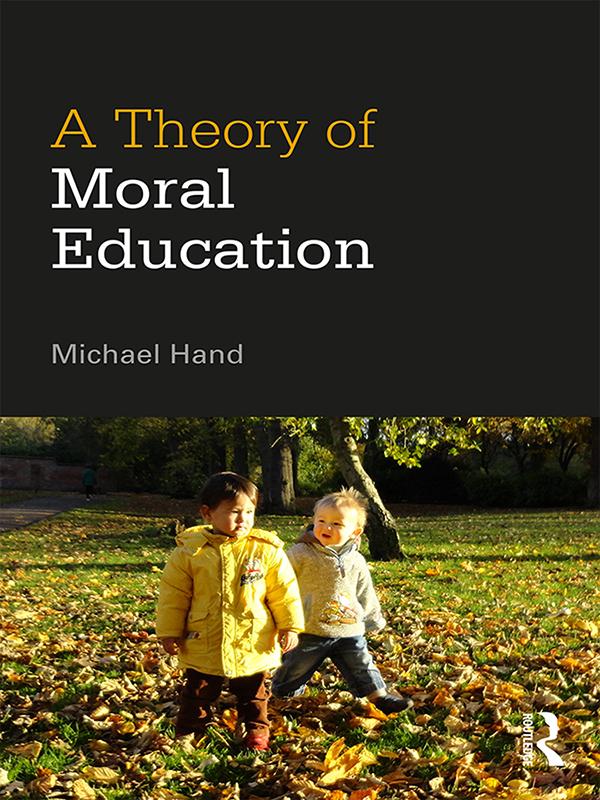
Children must be taught morality. They must be taught to recognise the authority of moral standards and to understand what makes them authoritative. But there’s a problem: the content and justification of morality are matters of reasonable disagreement among reasonable people. This makes it hard to see how educators can secure children’s commitment to moral standards without indoctrinating them.
In A Theory of Moral Education, Michael Hand tackles this problem head on. He sets out to show that moral education can and should be fully rational. It is true that many moral standards and justificatory theories are controversial, and educators have an obligation to teach these nondirectively, with the aim of enabling children to form their own considered views. But reasonable moral disagreement does not go all the way down: some basic moral standards are robustly justified, and these should be taught directively, with the aim of bringing children to recognise and understand their authority.
This is an original and important contribution to the philosophy of moral education, which lays a new theoretical foundation for the urgent practical task of teaching right from wrong.
Betal enkelt med kort, Klarna, Apple Pay eller Google Pay. Ikke fornøyd? Du har alltid 14 dagers angrerett. Les mer i våre vilkår. Har du spørsmål, send oss en e-post på hello@memmo.org.
Memmo gjør det enklere å studere – uansett hvor du er i verden. Hos oss samler du pensumbøker og smarte studieverktøy på ett og samme sted: sammendrag, quizer, podkaster og flashcards. Og så Ted, din studiekompis som svarer på alt du lurer på. Over 50 000 studenter studerer allerede her – bygget for at du skal lære raskere og stresse mindre.