
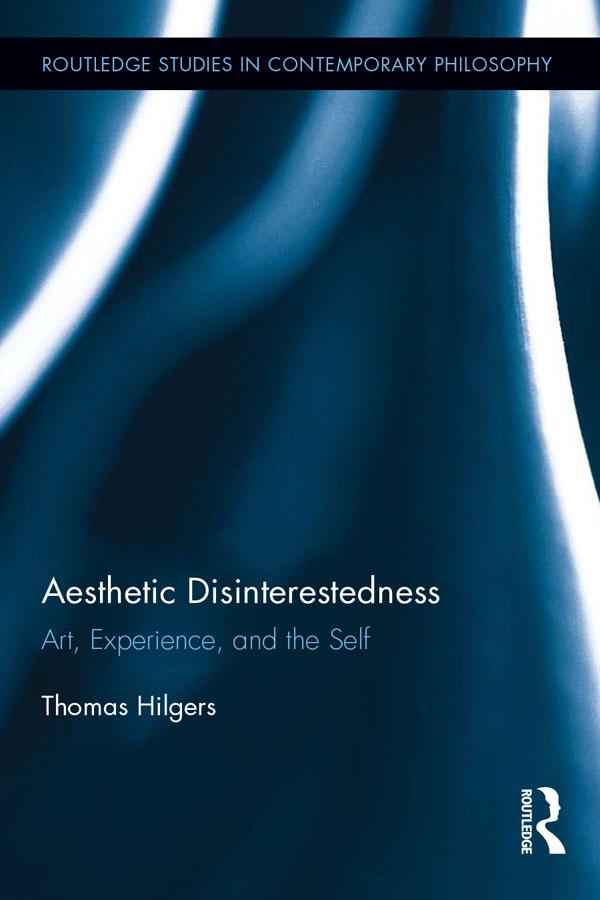
The notion of disinterestedness is often conceived of as antiquated or ideological. In spite of this, Hilgers argues that one cannot reject it if one wishes to understand the nature of art. He claims that an artwork typically asks a person to adopt a disinterested attitude towards what it shows, and that the effect of such an adoption is that it makes the person temporarily lose the sense of herself, while enabling her to gain a sense of the other. Due to an artwork’s particular wealth, multiperspectivity, and dialecticity, the engagement with it cannot culminate in the construction of world-views, but must initiate a process of self-critical thinking, which is a precondition of real self-determination. Ultimately, then, the aesthetic experience of art consists of a dynamic process of losing the sense of oneself, while gaining a sense of the other, and of achieving selfhood. In his book, Hilgers spells out the nature of this process by means of rethinking Kant’s and Schopenhauer’s aesthetic theories in light of more recent developments in philosophy–specifically in hermeneutics, critical theory, and analytic philosophy–and within the arts themselves–specifically within film and performance art.
Betal enkelt med kort, Klarna, Apple Pay eller Google Pay. Ikke fornøyd? Du har alltid 14 dagers angrerett. Les mer i våre vilkår. Har du spørsmål, send oss en e-post på hello@memmo.org.
Memmo gjør det enklere å studere – uansett hvor du er i verden. Hos oss samler du pensumbøker og smarte studieverktøy på ett og samme sted: sammendrag, quizer, podkaster og flashcards. Og så Ted, din studiekompis som svarer på alt du lurer på. Over 50 000 studenter studerer allerede her – bygget for at du skal lære raskere og stresse mindre.