
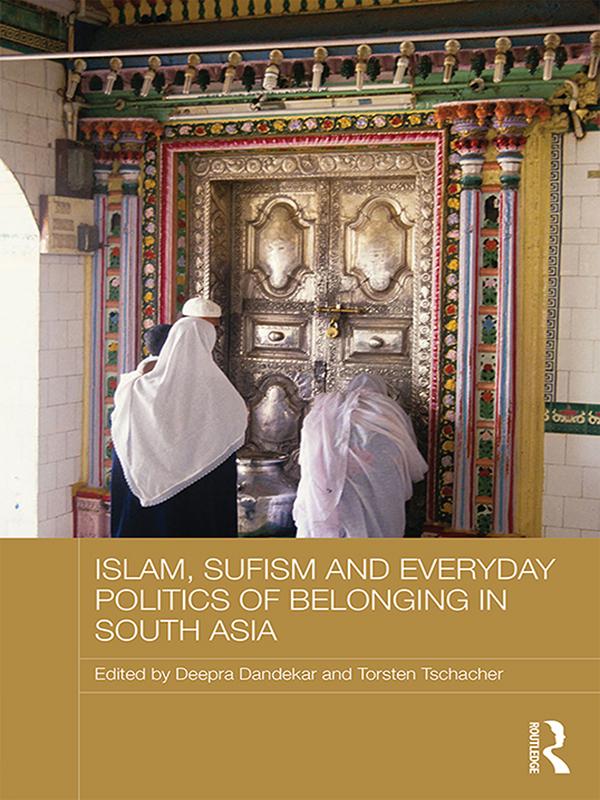
This book looks at the study of ideas, practices and institutions in South Asian Islam, commonly identified as ‘Sufism’, and how they relate to politics in South Asia. While the importance of Sufism for the lives of South Asian Muslims has been repeatedly asserted, the specific role played by Sufism in contestations over social and political belonging in South Asia has not yet been fully analysed.
Looking at examples from five countries in South Asia (India, Pakistan, Bangladesh, Sri Lanka, and Afghanistan), the book begins with a detailed introduction to political concerns over ‘belonging’ in relation to questions concerning Sufism and Islam in South Asia. This is followed with sections on Producing and Identifying Sufism; Everyday and Public Forms of Belonging; Sufi Belonging, Local and National; and Intellectual History and Narratives of Belonging. Bringing together scholars from diverse disciplines, the book explores the connection of Islam, Sufism and the Politics of Belonging in South Asia. It is an important contribution to South Asian Studies, Islamic Studies and South Asian Religion.
Betal enkelt med kort, Klarna, Apple Pay eller Google Pay. Ikke fornøyd? Du har alltid 14 dagers angrerett. Les mer i våre vilkår. Har du spørsmål, send oss en e-post på hello@memmo.org.
Memmo gjør det enklere å studere – uansett hvor du er i verden. Hos oss samler du pensumbøker og smarte studieverktøy på ett og samme sted: sammendrag, quizer, podkaster og flashcards. Og så Ted, din studiekompis som svarer på alt du lurer på. Over 50 000 studenter studerer allerede her – bygget for at du skal lære raskere og stresse mindre.