
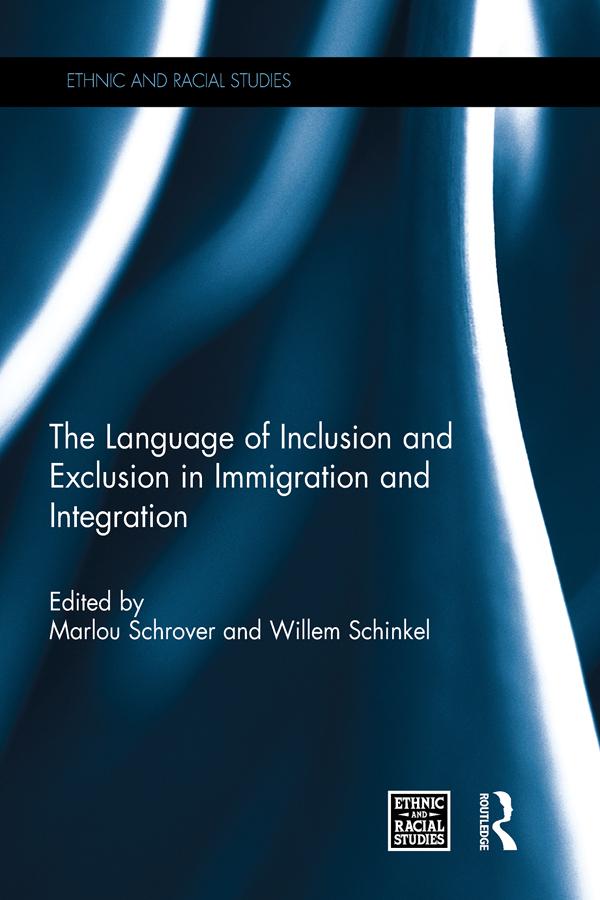
This collection provides an overview of some of the most relevant concepts in the study of the language of inclusion and exclusion, specifically with a view to the functioning of nation-state categories. Categorizations, words, and phrases are constantly renewed with the intention to exclude (mostly) or to include (rarely), promulgating problematizations that highlight discursive distinctions between in-groups and out-groups. Such discursive constructions and the practices through which they are effectuated are sites of symbolic power, and their study reveals the workings of power. Historical analysis of the language of inclusion and exclusion can help elucidate contemporary transformations of discursive power.
The chapters in this volume discuss forms of discursive problematization such as defining, claiming, legitimizing, expanding, sensationalization and suggestion, and it connects these to the discursive drawing of boundaries, focusing on discursive constructions of ‘illegality’, race, class, gender, immigrant integration and transnationalism. As state categorizations continuously differ, both the historical analysis of their genesis, functioning and transformation, and the contemporary analysis of their practical effectuation are crucial to an understanding of inclusion and exclusion.
This book was originally published as a special issue of Ethnic and Racial Studies.
Betal enkelt med kort, Klarna, Apple Pay eller Google Pay. Ikke fornøyd? Du har alltid 14 dagers angrerett. Les mer i våre vilkår. Har du spørsmål, send oss en e-post på hello@memmo.org.
Memmo gjør det enklere å studere – uansett hvor du er i verden. Hos oss samler du pensumbøker og smarte studieverktøy på ett og samme sted: sammendrag, quizer, podkaster og flashcards. Og så Ted, din studiekompis som svarer på alt du lurer på. Over 50 000 studenter studerer allerede her – bygget for at du skal lære raskere og stresse mindre.