
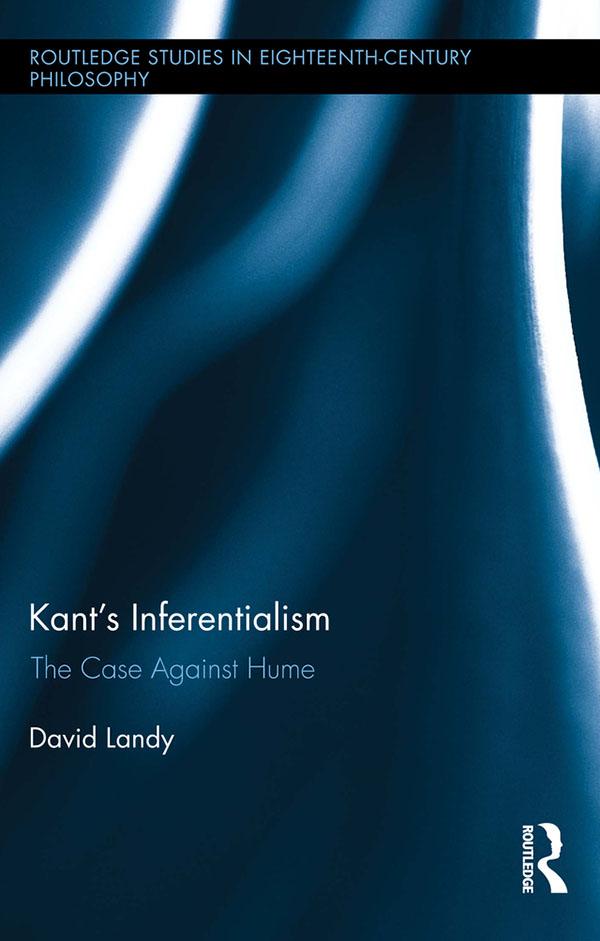
Kant’s Inferentialism draws on a wide range of sources to present a reading of Kant’s theory of mental representation as a direct response to the challenges issued by Hume in A Treatise of Human Nature. Kant rejects the conclusions that Hume draws on the grounds that these are predicated on Hume’s theory of mental representation, which Kant refutes by presenting objections to Hume’s treatment of representations of complex states of affairs and the nature of judgment. In its place, Kant combines an account of concepts as rules of inference with a detailed account of perception and of the self as the locus of conceptual norms to form a complete theory of human experience as an essentially rule-governed enterprise aimed at producing a representation of the world as a system of objects necessarily connected to one another via causal laws. This interpretation of the historical dialectic enriches our understanding of both Hume and Kant and brings to bear Kant’s insights into mental representation on contemporary debates in philosophy of mind. Kant’s version of inferentialism is both resistant to objections to contemporary accounts that cast these as forms of linguistic idealism, and serves as a remedy to misplaced Humean scientism about representation.
Betal enkelt med kort, Klarna, Apple Pay eller Google Pay. Ikke fornøyd? Du har alltid 14 dagers angrerett. Les mer i våre vilkår. Har du spørsmål, send oss en e-post på hello@memmo.org.
Memmo gjør det enklere å studere – uansett hvor du er i verden. Hos oss samler du pensumbøker og smarte studieverktøy på ett og samme sted: sammendrag, quizer, podkaster og flashcards. Og så Ted, din studiekompis som svarer på alt du lurer på. Over 50 000 studenter studerer allerede her – bygget for at du skal lære raskere og stresse mindre.