
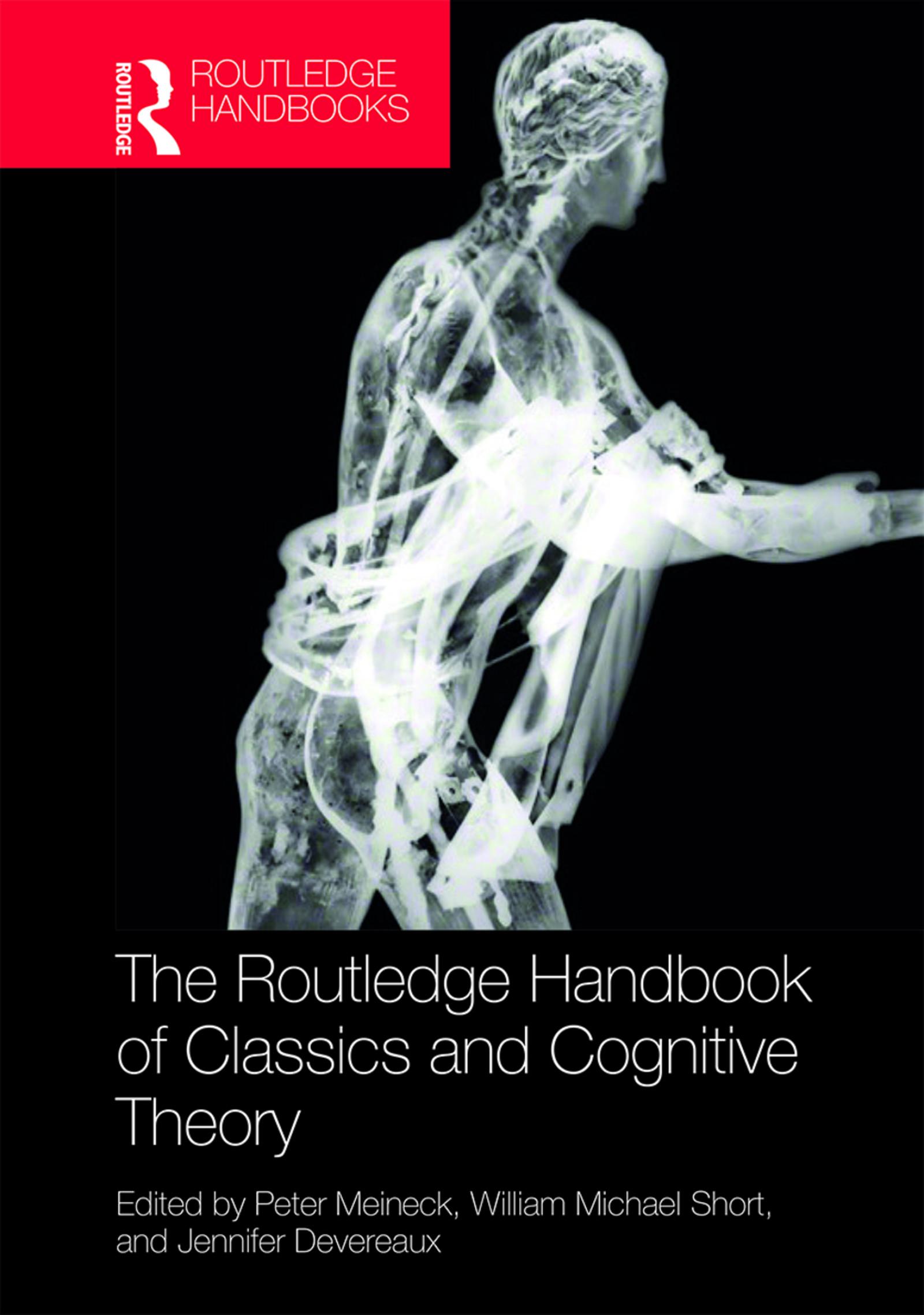
The Routledge Handbook of Classics and Cognitive Theory is an interdisciplinary volume that examines the application of cognitive theory to the study of the classical world, across several interrelated areas including linguistics, literary theory, social practices, performance, artificial intelligence and archaeology. With contributions from a diverse group of international scholars working in this exciting new area, the volume explores the processes of the mind drawing from research in psychology, philosophy, neuroscience, and anthropology, and interrogates the implications of these new approaches for the study of the ancient world.
Topics covered in this wide-ranging collection include: cognitive linguistics applied to Homeric and early Greek texts, Roman cultural semantics, linguistic embodiment in Latin literature, group identities in Greek lyric, cognitive dissonance in historiography, kinesthetic empathy in Sappho, artificial intelligence in Hesiod and Greek drama, the enactivism of Roman statues and memory and art in the Roman Empire.
This ground-breaking work is the first to organize the field, allowing both scholars and students access to the methodologies, bibliographies and techniques of the cognitive sciences and how they have been applied to classics.
Betal enkelt med kort, Klarna, Apple Pay eller Google Pay. Ikke fornøyd? Du har alltid 14 dagers angrerett. Les mer i våre vilkår. Har du spørsmål, send oss en e-post på hello@memmo.org.
Memmo gjør det enklere å studere – uansett hvor du er i verden. Hos oss samler du pensumbøker og smarte studieverktøy på ett og samme sted: sammendrag, quizer, podkaster og flashcards. Og så Ted, din studiekompis som svarer på alt du lurer på. Over 50 000 studenter studerer allerede her – bygget for at du skal lære raskere og stresse mindre.