
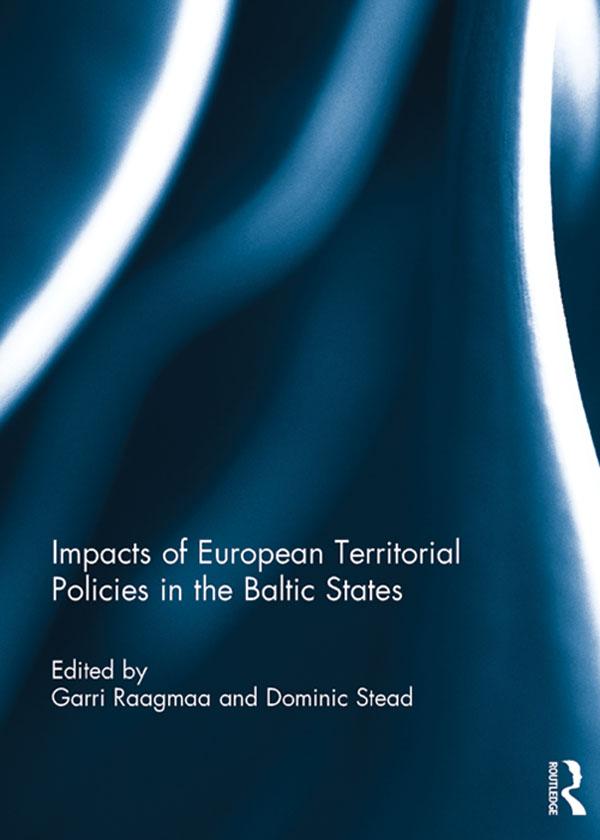
Urban and regional development in the Baltic States and other Central and Eastern European countries has experienced rapid changes since their re-independence at the beginning of the 1990s. Meanwhile, urban and regional planning institutions and organizational cultures in the Baltic States have only changed rather incrementally, despite various national and European pressures for reform. As a consequence, the effects of European cohesion and structural policy measures have been quite modest, and the ability of the planning systems in the Baltic states to manage contemporary trends in urban and regional development has become increasingly limited. This book focuses on these issues and tensions of spatial planning and development in the Baltic States and their distinctiveness compared to other European countries. It provides an overview of the historical and cultural context of spatial development, a discussion of the processes of Europeanization of spatial planning in the specific context of the Baltic States, and an analysis of whether these processes may be leading to policy convergence in the region.
This book was published as a special issue of European Planning Studies.
Betal enkelt med kort, Klarna, Apple Pay eller Google Pay. Ikke fornøyd? Du har alltid 14 dagers angrerett. Les mer i våre vilkår. Har du spørsmål, send oss en e-post på hello@memmo.org.
Memmo gjør det enklere å studere – uansett hvor du er i verden. Hos oss samler du pensumbøker og smarte studieverktøy på ett og samme sted: sammendrag, quizer, podkaster og flashcards. Og så Ted, din studiekompis som svarer på alt du lurer på. Over 50 000 studenter studerer allerede her – bygget for at du skal lære raskere og stresse mindre.