
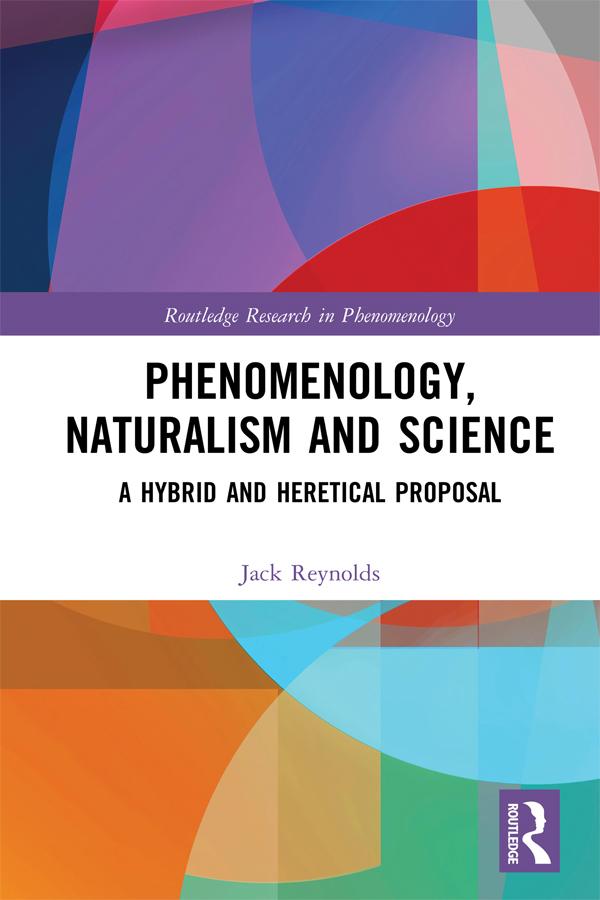
Arguing for the compatibility of phenomenology and naturalism, this book also refashions each. The opening chapters begin with a methodological focus, which seeks to curb the "over-bidding" characteristic of both traditional transcendental phenomenology and scientific naturalism. Having thus opened up the possibility that the twain might meet, it is in the detailed chapters on matters where scientific and phenomenological work overlap and sometimes conflict – on time, body, and others – that the book contests some of the standard ways of understanding the relationship between phenomenological philosophy and empirical science, and between phenomenology and naturalism. Without invoking a methodological move of quarantine, in which each is allocated to their proper and separate domains, the book outlines the significance of the first-person perspective characteristic of phenomenology – both epistemically and ontologically – while according due respect to the relevant empirical sciences. The book thus renews phenomenology and argues for its ongoing relevance and importance for the future of philosophy.
Betal enkelt med kort, Klarna, Apple Pay eller Google Pay. Ikke fornøyd? Du har alltid 14 dagers angrerett. Les mer i våre vilkår. Har du spørsmål, send oss en e-post på hello@memmo.org.
Memmo gjør det enklere å studere – uansett hvor du er i verden. Hos oss samler du pensumbøker og smarte studieverktøy på ett og samme sted: sammendrag, quizer, podkaster og flashcards. Og så Ted, din studiekompis som svarer på alt du lurer på. Over 50 000 studenter studerer allerede her – bygget for at du skal lære raskere og stresse mindre.