
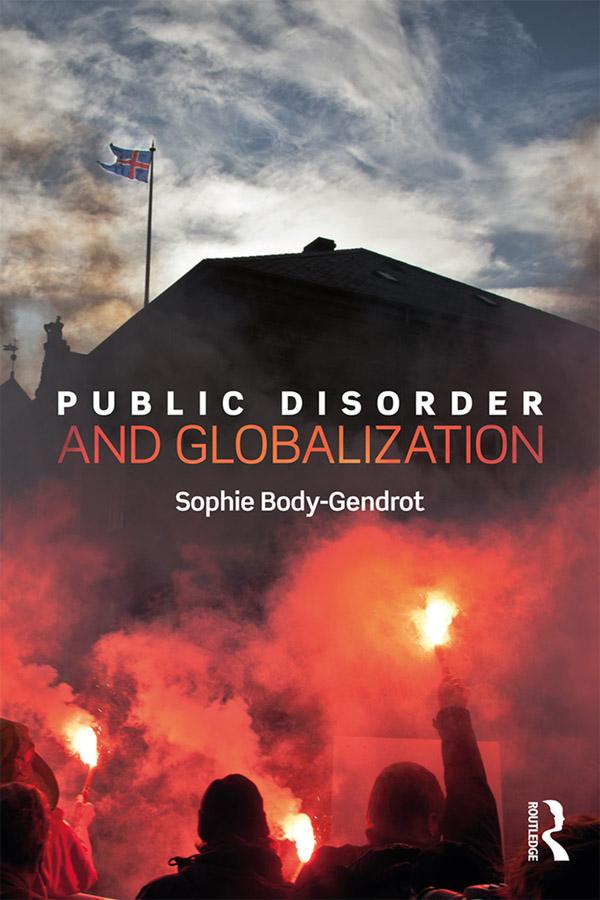
The current growth of incidents of public disorder around the world can be seen as symptomatic of major transformations in globalized society, government, and technology. But while disorder is routinely perceived as a disturbing phenomenon, it can also be a catalyst for positive transformation and regeneration. As social media is increasingly used as a platform for mobilization and organization, local disorder may spread outward through national borders, receiving international coverage and visibility as well as triggering a domino effect of global unrest.
Combining qualitative and quantitative research, this ground-breaking text analyzes oppositional notions of order and disorder in global, national, and local contexts and considers the role of the police, the justice system, and other authorities in developing a range of responsive strategies. The author develops a new comprehensive framework for engaging in comparative and historical analysis of public disorder by drawing upon international case studies of public unrest such as 2005 in Paris and 2011 in London; the events in Ferguson and Baltimore that seeded Black Lives Matter; the Occupy movements in Zuccotti Park, Gezi Park, and Hong Kong; and the terror attacks in Paris and Brussels.
This dynamic comparative study is informed by extensive international interviews and will be a required reading for students and scholars of criminology, sociology, political science, and urban studies.
Betal enkelt med kort, Klarna, Apple Pay eller Google Pay. Ikke fornøyd? Du har alltid 14 dagers angrerett. Les mer i våre vilkår. Har du spørsmål, send oss en e-post på hello@memmo.org.
Memmo gjør det enklere å studere – uansett hvor du er i verden. Hos oss samler du pensumbøker og smarte studieverktøy på ett og samme sted: sammendrag, quizer, podkaster og flashcards. Og så Ted, din studiekompis som svarer på alt du lurer på. Over 50 000 studenter studerer allerede her – bygget for at du skal lære raskere og stresse mindre.