
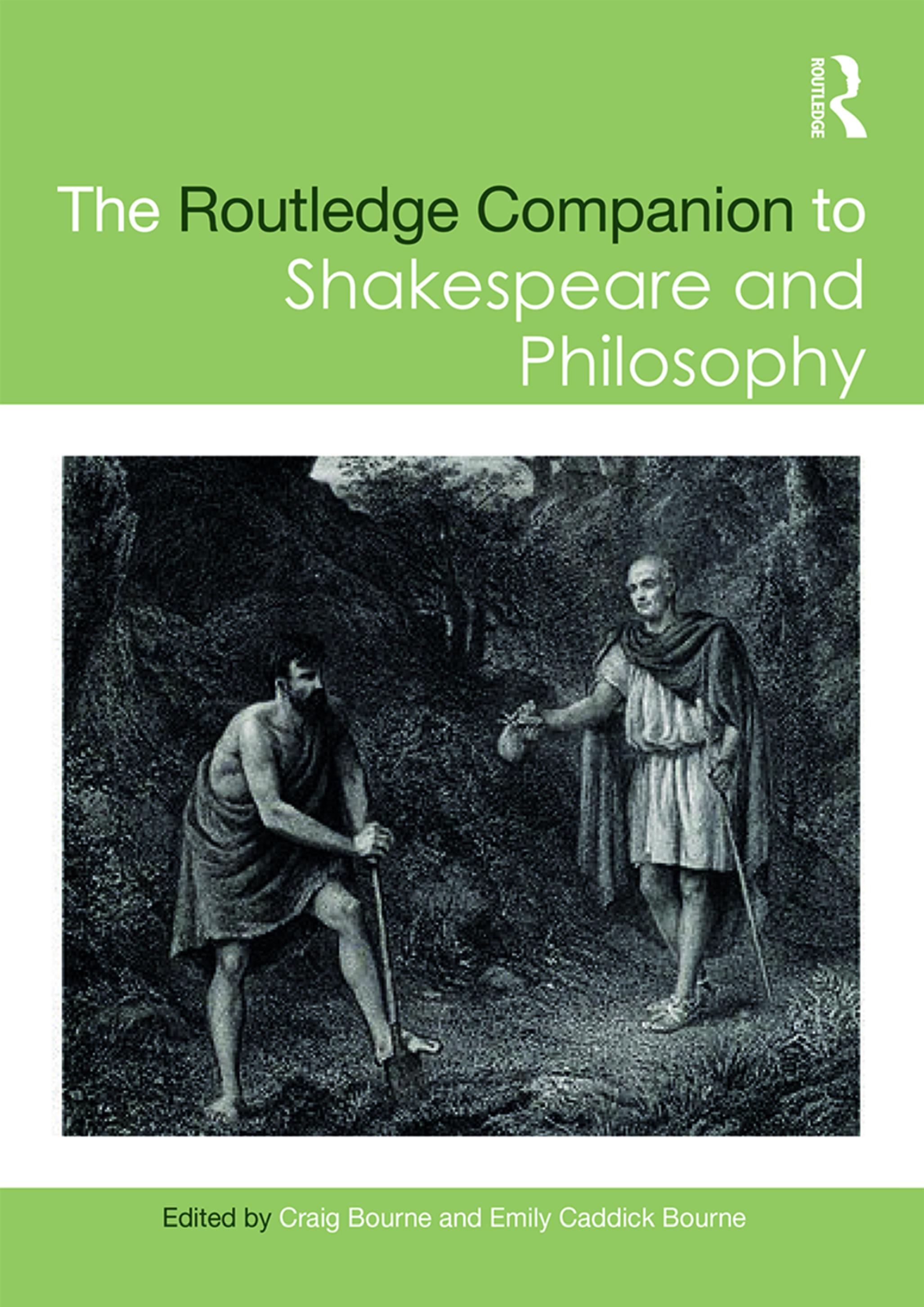
Iago’s ‘I am not what I am’ epitomises how Shakespeare’s work is rich in philosophy, from issues of deception and moral deviance to those concerning the complex nature of the self, the notions of being and identity, and the possibility or impossibility of self-knowledge and knowledge of others. Shakespeare’s plays and poems address subjects including ethics, epistemology, metaphysics, philosophy of mind, and social and political philosophy. They also raise major philosophical questions about the nature of theatre, literature, tragedy, representation and fiction.
The Routledge Companion to Shakespeare and Philosophy is the first major guide and reference source to Shakespeare and philosophy. It examines the following important topics:
- What roles can be played in an approach to Shakespeare by drawing on philosophical frameworks and the work of philosophers?
- What can philosophical theories of meaning and communication show about the dynamics of Shakespearean interactions and vice versa?
- How are notions such as political and social obligation, justice, equality, love, agency and the ethics of interpersonal relationships demonstrated in Shakespeare’s works?
- What do the plays and poems invite us to say about the nature of knowledge, belief, doubt, deception and epistemic responsibility?
- How can the ways in which Shakespeare’s characters behave illuminate existential issues concerning meaning, absurdity, death and nothingness?
- What might Shakespeare’s characters and their actions show about the nature of the self, the mind and the identity of individuals?
- How can Shakespeare’s works inform philosophical approaches to notions such as beauty, humour, horror and tragedy?
- How do Shakespeare’s works illuminate philosophical questions about the nature of fiction, the attitudes and expectations involved in engagement with theatre, and the role of acting and actors in creating representations?
The Routledge Companion to Shakespeare and Philosophy is essential reading for students and researchers in aesthetics, philosophy of literature and philosophy of theatre, as well as those exploring Shakespeare in disciplines such as literature and theatre and drama studies. It is also relevant reading for those in areas of philosophy such as ethics, epistemology and philosophy of language.
Betal enkelt med kort, Klarna, Apple Pay eller Google Pay. Ikke fornøyd? Du har alltid 14 dagers angrerett. Les mer i våre vilkår. Har du spørsmål, send oss en e-post på hello@memmo.org.
Memmo gjør det enklere å studere – uansett hvor du er i verden. Hos oss samler du pensumbøker og smarte studieverktøy på ett og samme sted: sammendrag, quizer, podkaster og flashcards. Og så Ted, din studiekompis som svarer på alt du lurer på. Over 50 000 studenter studerer allerede her – bygget for at du skal lære raskere og stresse mindre.