
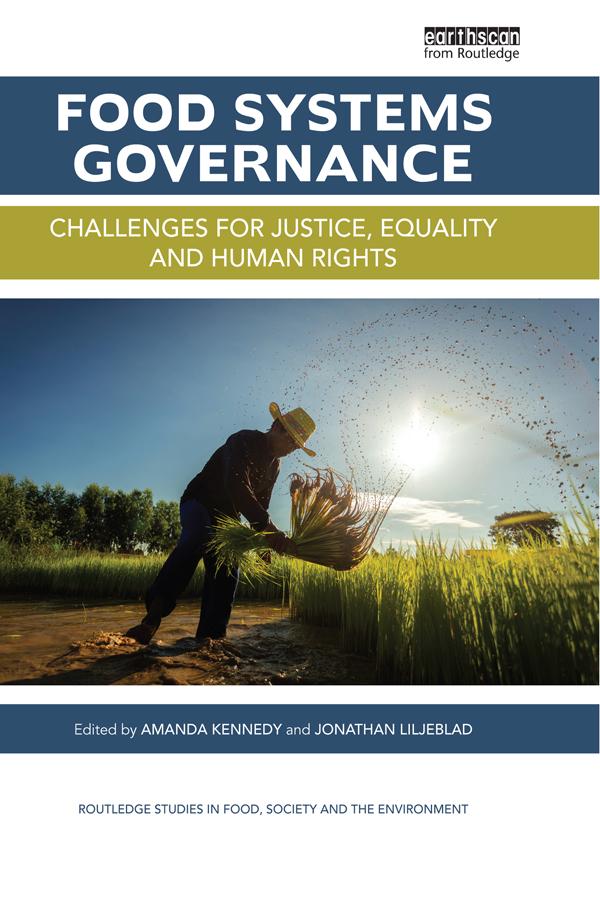
Sustainability and food production represent a major challenge to society, with both consumption and supply sides posing practical and ethical dilemmas. This book shows that food governance issues can occur in many ways and at many points along the food chain. The risks and impacts, particularly with the increasing globalisation of food systems, are often distributed in unequal ways.
It is the role of law to form the pivot around which these issues are addressed in society in the form of food governance mechanisms. The chapters in this book address a range of issues in food governance revolving around questions of justice, fairness, equality and human rights. They identify different issues regarding inequality in access and control over food governance. Some address generic governance and institutional issues across a range of international contexts, while others present case studies, including from Argentina, China, India, Indonesia, Thailand, UK and West Africa. The book offers directions for reform of the law and legal institutions to mitigate the dangers of inequality and promote greater fairness in food governance.
Betal enkelt med kort, Klarna, Apple Pay eller Google Pay. Ikke fornøyd? Du har alltid 14 dagers angrerett. Les mer i våre vilkår. Har du spørsmål, send oss en e-post på hello@memmo.org.
Memmo gjør det enklere å studere – uansett hvor du er i verden. Hos oss samler du pensumbøker og smarte studieverktøy på ett og samme sted: sammendrag, quizer, podkaster og flashcards. Og så Ted, din studiekompis som svarer på alt du lurer på. Over 50 000 studenter studerer allerede her – bygget for at du skal lære raskere og stresse mindre.