
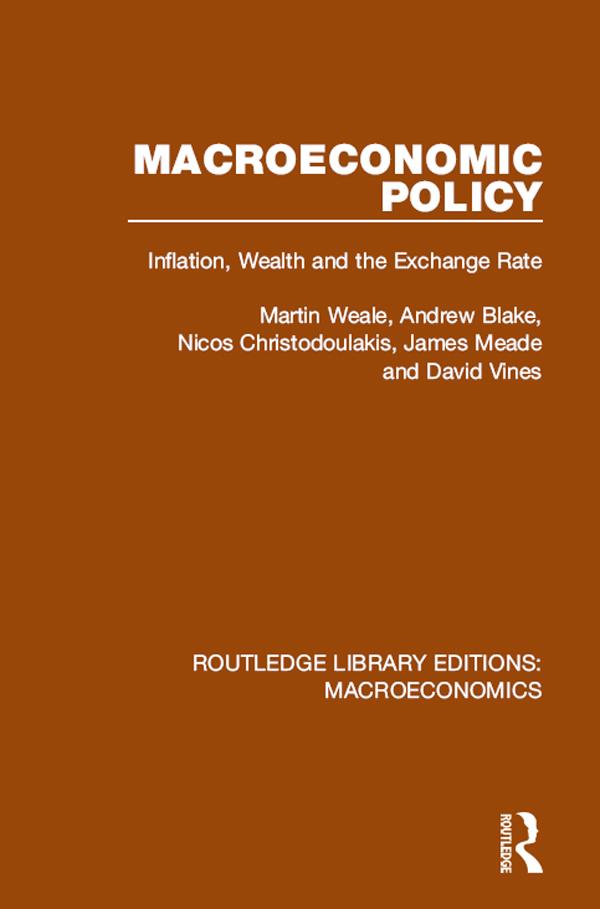
This analysis of macroeconomic policy, originally published in 1989, argues that key government objectives, such as reduced inflation, decreased unemployment and an adequate level of national saving can be achieved only by employing both monetary and fiscal policies, in conjunction with supply-side policies expressly designed to improve the workings of the labour market.
Part 1 is a comparative analysis showing the effects of monetary and fiscal policy on the economy. Real-wage rigidity in the labour market is shown to have important consequences for the working of both types of policy, because it conditions the economy’s response to tax changes. Part 2 presents an econometric model which combines consistent stock-flow accounts with a full range of expectational effects. Part 3 presents an innovative technique for solving rational expectations models with the need for arbitary terminal conditions.
Betal enkelt med kort, Klarna, Apple Pay eller Google Pay. Ikke fornøyd? Du har alltid 14 dagers angrerett. Les mer i våre vilkår. Har du spørsmål, send oss en e-post på hello@memmo.org.
Memmo gjør det enklere å studere – uansett hvor du er i verden. Hos oss samler du pensumbøker og smarte studieverktøy på ett og samme sted: sammendrag, quizer, podkaster og flashcards. Og så Ted, din studiekompis som svarer på alt du lurer på. Over 50 000 studenter studerer allerede her – bygget for at du skal lære raskere og stresse mindre.