
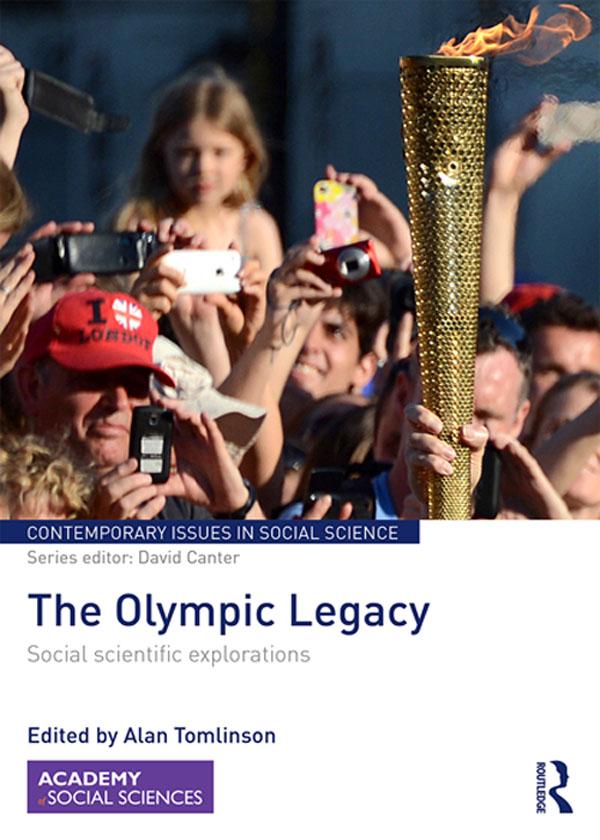
This comprehensive collection provides an overview of social scientific perspectives on Olympic legacy, using specialist analyses and selected cases to illuminate the recurring anthropological, political, and sociological dimensions of the legacy debate. Drawing upon research conducted on the Beijing, Vancouver, Athens, London and Rio de Janeiro Olympic Games, it identifies the recurrent rhetoric that has characterised the legacy debate, alongside the harsh realities that contradict many legacies and aspirations.
Fifteen researchers from six countries contribute a range of critical analytical studies which explore macro-perspectives on the shifting political economy symbolized at Beijing or in an over-reaching Greece, the soft power benefits perceived by the Rio 2016 organizers, the anthropological study of neighbourhood spaces threatened by corporate branding, and the apparatus of surveillance surrounding an Olympic Games. The symbolic importance of the Games is also captured in studies of volunteer motivations, labour and work initiatives, and the introduction of women’s boxing at London 2012. In a comprehensive overview, Alan Tomlinson illuminates the rhetoric of successive Olympic cycles and the rise to prominence of the legacy question in that debate.
This book was originally published as a special issue of Contemporary Social Science.
Betal enkelt med kort, Klarna, Apple Pay eller Google Pay. Ikke fornøyd? Du har alltid 14 dagers angrerett. Les mer i våre vilkår. Har du spørsmål, send oss en e-post på hello@memmo.org.
Memmo gjør det enklere å studere – uansett hvor du er i verden. Hos oss samler du pensumbøker og smarte studieverktøy på ett og samme sted: sammendrag, quizer, podkaster og flashcards. Og så Ted, din studiekompis som svarer på alt du lurer på. Over 50 000 studenter studerer allerede her – bygget for at du skal lære raskere og stresse mindre.