
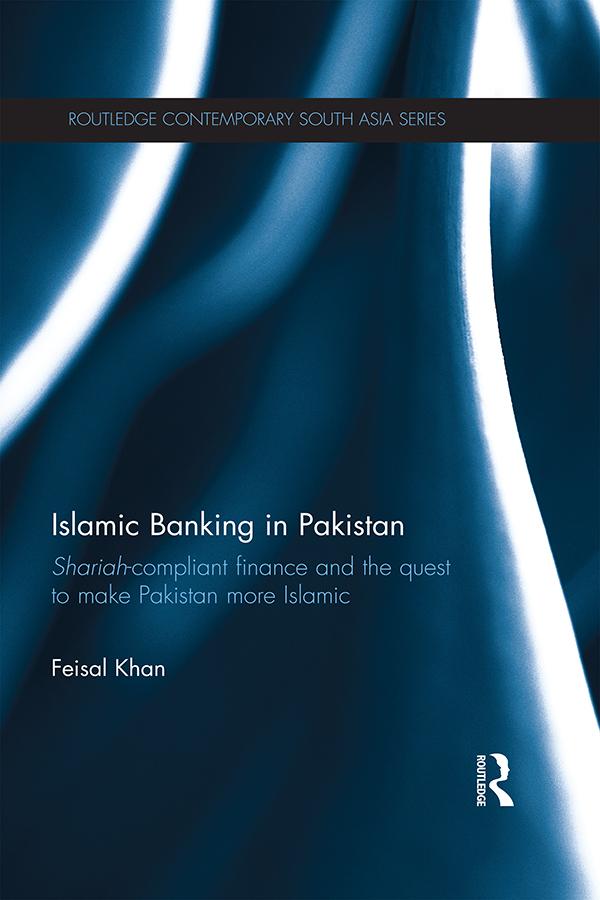
Islamic Banking and Finance (IBF) has become a growing force over the past three decades, with Pakistan being one of the IBF pioneers by converting to an ‘interest-free’ banking system in 1985. However, since independence in 1947, there has been continual tension over Pakistan’s essential character, between Islamic Minimalists, who favour a Modernist interpretation of Islam, and those who favour an Islamic Maximalist interpretation that sees Pakistan as a model Islamic state.
This book analyses the push to Islamize Pakistan and its financial system by Islamic revivalists, following the early 1947 debates in the original Constituent Assembly to the final 2002 ruling on IBF of the Shariat Appellate Bench of the Pakistan Supreme Court. It examines the practice and theory behind contemporary Islamic, "Shariah-compliant", banking. It offers extensive interviews with Pakistani Islamic bankers on the state of their industry and how they see it developing, and provides analysis on how the Islamic banks’ customers differ from those of conventional ones.
Presenting a critical analysis of Pakistan’s IBF experience and offering a new insight into Pakistan’s banking industry that illustrates broader political and social trends in the country, this book will be of interest to specialists on Islam, South Asia and International Economics.
Betal enkelt med kort, Klarna, Apple Pay eller Google Pay. Ikke fornøyd? Du har alltid 14 dagers angrerett. Les mer i våre vilkår. Har du spørsmål, send oss en e-post på hello@memmo.org.
Memmo gjør det enklere å studere – uansett hvor du er i verden. Hos oss samler du pensumbøker og smarte studieverktøy på ett og samme sted: sammendrag, quizer, podkaster og flashcards. Og så Ted, din studiekompis som svarer på alt du lurer på. Over 50 000 studenter studerer allerede her – bygget for at du skal lære raskere og stresse mindre.