
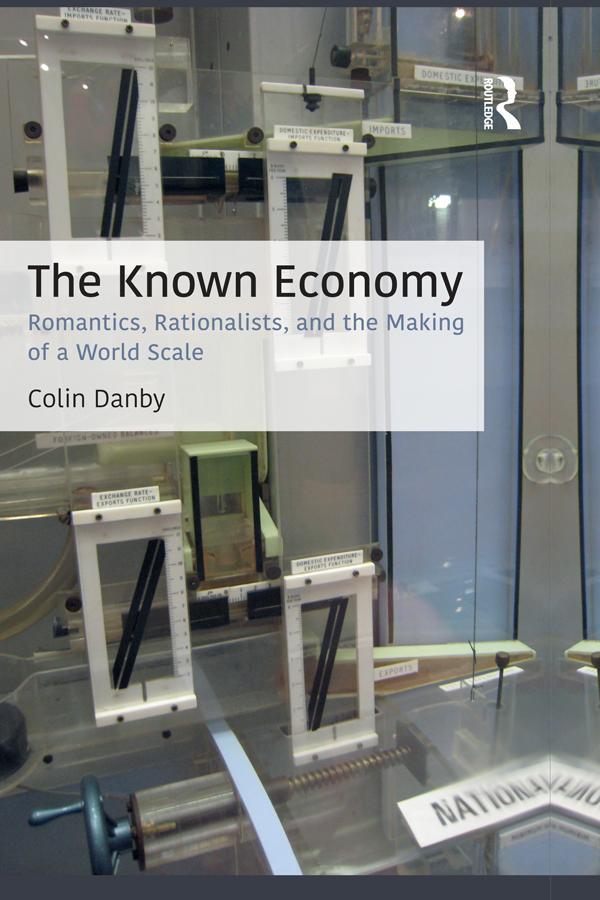
Why do critics and celebrants of globalization concur that international trade and finance represent an inexorable globe-bestriding force with a single logic? The Known Economy shows that both camps rest on the same ideas about how the world is scaled. Two centuries ago romantic and rationalist theorists concurred that the world was divided into discrete nations, moving at different rates toward a "modernity", split between love and money. Though differing over whether this history is tragedy or triumph, they united in projecting an empty "international" space in which a Moloch-like global capitalism could lurk.
The Known Economy tracks the colonial development of national accounting and re-examines the ways gender and heteronormativity are built in to economic representation. It re-interprets the post-WWII spread of standardized economic statistics as the project of international organizations looking over the shoulders of national governments, rather than the expanding power of national governments over populations.
Betal enkelt med kort, Klarna, Apple Pay eller Google Pay. Ikke fornøyd? Du har alltid 14 dagers angrerett. Les mer i våre vilkår. Har du spørsmål, send oss en e-post på hello@memmo.org.
Memmo gjør det enklere å studere – uansett hvor du er i verden. Hos oss samler du pensumbøker og smarte studieverktøy på ett og samme sted: sammendrag, quizer, podkaster og flashcards. Og så Ted, din studiekompis som svarer på alt du lurer på. Over 50 000 studenter studerer allerede her – bygget for at du skal lære raskere og stresse mindre.