
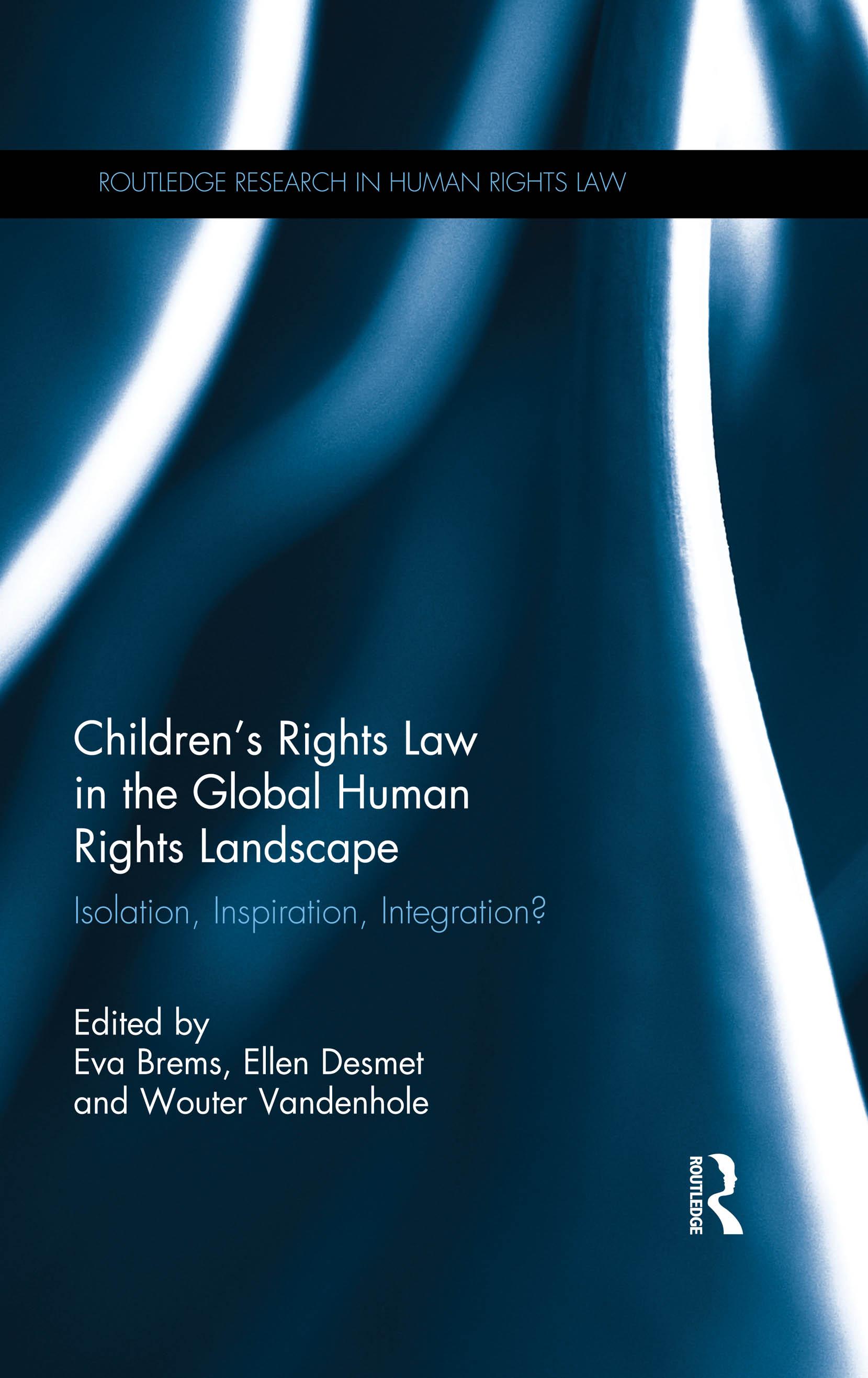
Children’s rights law is often studied and perceived in isolation from the broader field of human rights law. This volume explores the inter-relationship between children’s rights law and more general human rights law in order to see whether elements from each could successfully inform the other. Children’s rights law has a number of distinctive characteristics, such as the emphasis on the ‘best interests of the child’, the use of general principles, and the inclusion of ‘third parties’ (e.g. parents and other care-takers) in treaty provisions. The first part of this book questions whether these features could be a source of inspiration for general human rights law. In part two, the reverse question is asked: could children’s rights law draw inspiration from developments in other branches of human rights law that focus on other specific categories of rights holders, such as women, persons with disabilities, indigenous peoples, or older persons? Finally, the interaction between children’s rights law and human rights law – and the potential for their isolation, inspiration or integration – may be coloured or determined by the thematic issue under consideration. Therefore the third part of the book studies the interplay between children’s rights law and human rights law in the context of specific topics: intra-family relations, LGBTQI marginalization, migration, media, the environment and transnational human rights obligations.
Betal enkelt med kort, Klarna, Apple Pay eller Google Pay. Ikke fornøyd? Du har alltid 14 dagers angrerett. Les mer i våre vilkår. Har du spørsmål, send oss en e-post på hello@memmo.org.
Memmo gjør det enklere å studere – uansett hvor du er i verden. Hos oss samler du pensumbøker og smarte studieverktøy på ett og samme sted: sammendrag, quizer, podkaster og flashcards. Og så Ted, din studiekompis som svarer på alt du lurer på. Over 50 000 studenter studerer allerede her – bygget for at du skal lære raskere og stresse mindre.