
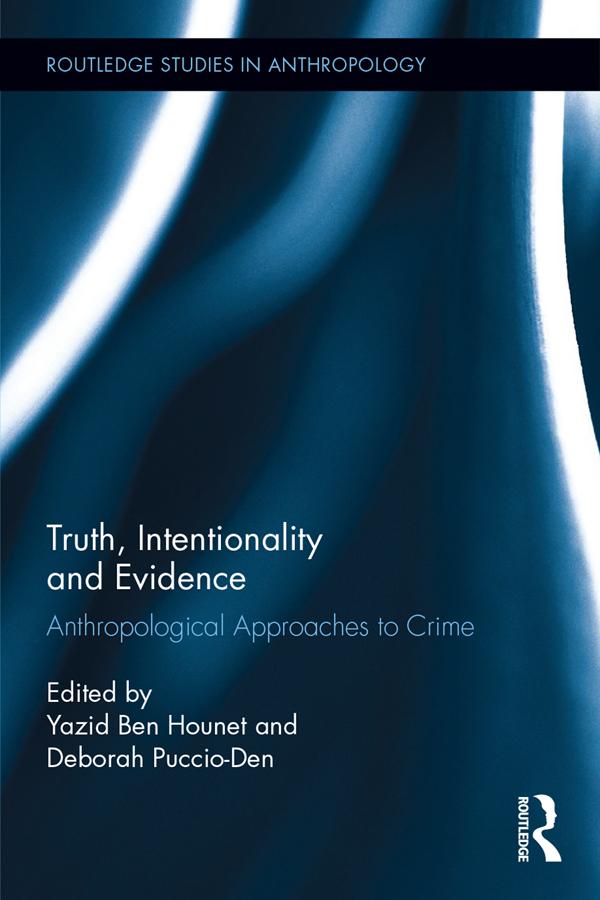
This book provides an anthropological exploration of the ways in which crime is perceived and defined, focusing on notions of truth, intentionality, and evidence. The chapters contain rich ethnographic case studies drawn from work in the Middle East, Africa, India, Mexico and Europe. A variety of instances are discussed, from court proceedings, police reports and newspapers to moments of conflict resolution and reconciliation. Through analysis of this material, the authors reflect on how perception of an act as a crime can differ and how the definition of crime may not be shared by all societies. The approach takes into consideration local standards as well as social, legal and contextual constraints.
Betal enkelt med kort, Klarna, Apple Pay eller Google Pay. Ikke fornøyd? Du har alltid 14 dagers angrerett. Les mer i våre vilkår. Har du spørsmål, send oss en e-post på hello@memmo.org.
Memmo gjør det enklere å studere – uansett hvor du er i verden. Hos oss samler du pensumbøker og smarte studieverktøy på ett og samme sted: sammendrag, quizer, podkaster og flashcards. Og så Ted, din studiekompis som svarer på alt du lurer på. Over 50 000 studenter studerer allerede her – bygget for at du skal lære raskere og stresse mindre.