
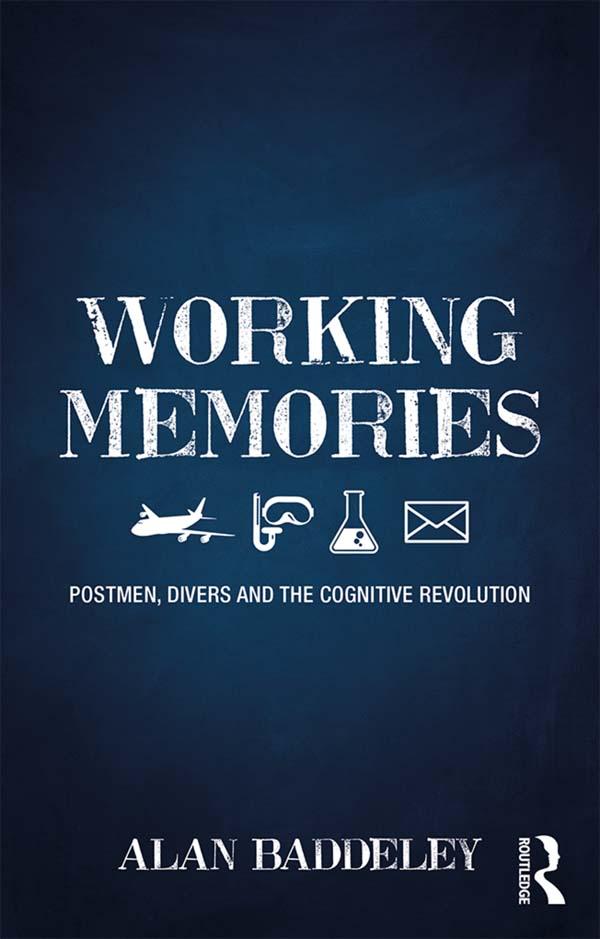
Technological developments during the Second World War led to an approach that linked ideas from computer science to neuroscience, linguistics, philosophy and psychology, known today as the Cognitive Revolution. Leaving behind traditional behaviourist approaches popular at the time, psychology began to utilise artificial intelligence and computer science to develop testable theories and design groundbreaking new experiments. The Cognitive Revolution dramatically changed the way that psychological research and studies were conducted and proposed a new way of thinking about the mind.
In Working Memories, Alan Baddeley, one of the world's leading authorities on Human Memory, draws on his own personal experience of this time, recounting the radical development of a pioneering science in parallel with his own transatlantic, vibrant and distinguished career.
Detailing the excitement and sometimes frustration experienced in taking psychology into the world beyond the laboratory, Working Memories presents unique insights into the mind and psychological achievements of one of the most influential psychologists of our time.
Betal enkelt med kort, Klarna, Apple Pay eller Google Pay. Ikke fornøyd? Du har alltid 14 dagers angrerett. Les mer i våre vilkår. Har du spørsmål, send oss en e-post på hello@memmo.org.
Memmo gjør det enklere å studere – uansett hvor du er i verden. Hos oss samler du pensumbøker og smarte studieverktøy på ett og samme sted: sammendrag, quizer, podkaster og flashcards. Og så Ted, din studiekompis som svarer på alt du lurer på. Over 50 000 studenter studerer allerede her – bygget for at du skal lære raskere og stresse mindre.