
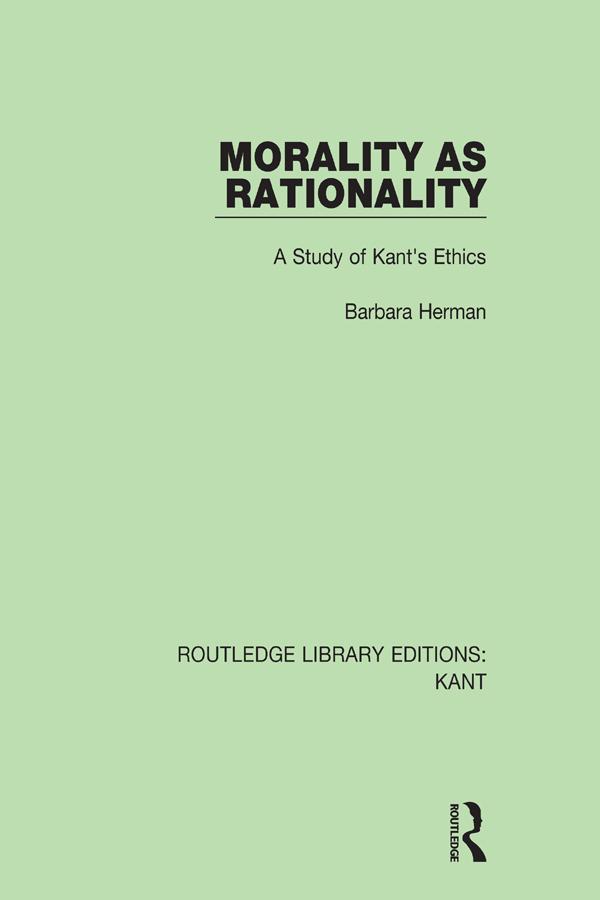
First published in 1990. The aim of this thesis is to show that the way to understand the central claims of Kant’s ethics is to accept the idea that morality is a distinctive form of rationality; that the moral "ought" belongs to a system of imperatives based in practical reason; and that moral judgment, therefore, is a species of rational assessment of agents’ actions. It argues, in effect, that you cannot understand Kant’s views about morality if you read him with Humean assumptions about rationality. This title will be of interest to students of philosophy.
Betal enkelt med kort, Klarna, Apple Pay eller Google Pay. Ikke fornøyd? Du har alltid 14 dagers angrerett. Les mer i våre vilkår. Har du spørsmål, send oss en e-post på hello@memmo.org.
Memmo gjør det enklere å studere – uansett hvor du er i verden. Hos oss samler du pensumbøker og smarte studieverktøy på ett og samme sted: sammendrag, quizer, podkaster og flashcards. Og så Ted, din studiekompis som svarer på alt du lurer på. Over 50 000 studenter studerer allerede her – bygget for at du skal lære raskere og stresse mindre.