
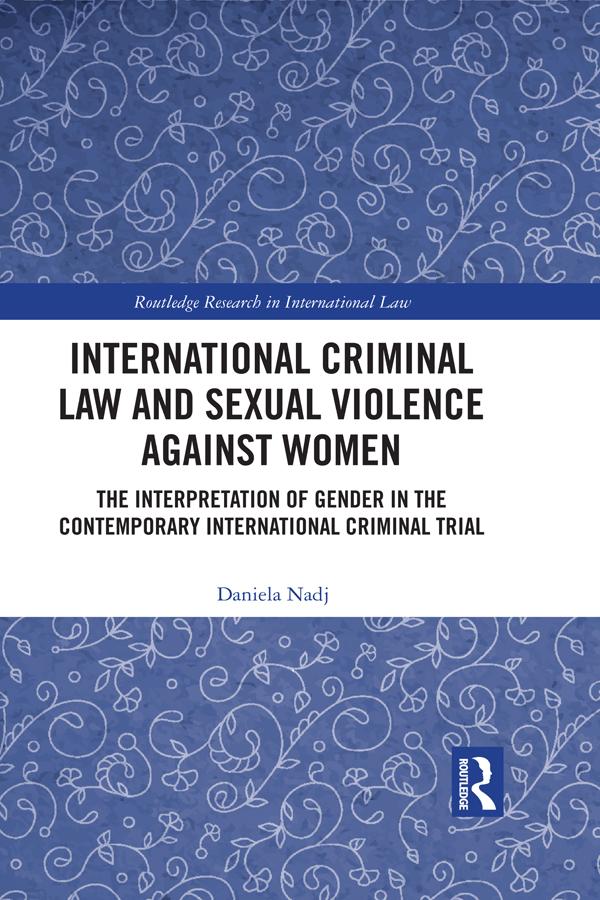
This book explores the prosecution of wartime sexual violence in international criminal law and asks what the juridicalisation of gender-based violence signifies for women. The book explores the portrayal of the various gendered identities that surface in armed conflict and it asks whether the law is capable of reflecting these in subsequent judgements.
Focusing on the International Criminal Tribunal for the Former Yugoslavia and the International Criminal Tribunal for Rwanda as well as subsequent developments in the International Criminal Court, the book shows how the tribunals have delivered landmark jurisprudence in the area of sexual violence against women and provided a legacy for how gender justice is incorporated into international law. However, Daniela Nadj argues that in the relevant cases there is a tendency to depict women in monolithic fashion with little agency or sense of identity beyond their ethnicity. By bringing to the surface the complexity and multi-faceted gendered identities in wartime, the book calls for a reconceptualisation of notions of femininity in armed conflict.
Betal enkelt med kort, Klarna, Apple Pay eller Google Pay. Ikke fornøyd? Du har alltid 14 dagers angrerett. Les mer i våre vilkår. Har du spørsmål, send oss en e-post på hello@memmo.org.
Memmo gjør det enklere å studere – uansett hvor du er i verden. Hos oss samler du pensumbøker og smarte studieverktøy på ett og samme sted: sammendrag, quizer, podkaster og flashcards. Og så Ted, din studiekompis som svarer på alt du lurer på. Over 50 000 studenter studerer allerede her – bygget for at du skal lære raskere og stresse mindre.